
 Written and medically reviewed by Paul Norio Morton, MD, FAAOS, FAAHKS · Board-certified orthopedic surgeon · Last reviewed July 2026
Do I Need Surgery?
Not every torn ACL needs an operation
The ACL stabilizes the knee during cutting and pivoting. A torn ACL does not heal on its own without treatment — but whether treatment means surgery depends on your knee, your activities, and your goals. Our team weighs non-operative options alongside surgery for every ACL injury, so the recommendation you get isn't automatically surgical.
Surgery is often considered when
- Your knee gives way with cutting, pivoting, or everyday activity
- An MRI confirms a complete ACL tear
- You play pivoting sports or have an active job or lifestyle
- Other structures — meniscus or cartilage — are injured too
Non-surgical care may fit when you have
- A partial tear with a stable, well-functioning knee
- Lower-demand activities without cutting or pivoting
- A preference to try structured rehab and bracing first
- Health factors that make surgery a poor fit right now
Either way, "prehab" — calming swelling and restoring motion before any surgery — is associated with better recovery. An early evaluation keeps every option open, including time-sensitive ones like BEAR® repair.
Your Options
Two surgical paths: reconstruct or restore
Both are arthroscopic, minimally invasive, and typically outpatient. Which fits you depends on your tear pattern, timing, anatomy, and goals.
ACL reconstruction
Standard of careThe torn ligament is replaced with a graft — the most established treatment for a complete ACL tear, and one of the most common orthopedic procedures in the U.S.
- Individualized graft choice — quadriceps-tendon, hamstring, or patellar-tendon autograft, matched to your anatomy and sport. No single graft is best for everyone.
- Quadriceps-tendon autograft — a strong, reliable graft that spares the hamstring and patellar tendons.
- All-inside technique — a minimally invasive reconstruction that preserves bone and can mean less post-operative pain.
- Whole-knee assessment — meniscus and cartilage injuries are addressed at the same surgery when present.
BEAR® implant repair
RestorativeThe BEAR® (Bridge-Enhanced ACL Restoration) implant is the first innovation in ACL tear treatment in more than 30 years — the first FDA-authorized medical technology that enables the body to heal its own torn ACL, rather than replacing it with a graft.
The implant acts as a bridge between the torn ends of the ACL. The surgeon adds a small amount of your own blood, and together they help the ligament heal back together while maintaining its original attachments to the femur and tibia — restoring the knee's natural anatomy. As the ACL heals, the implant is resorbed by the body, usually within about eight weeks. Because no graft is harvested, there is no second surgical wound site.
Eligibility requires
- A complete rupture of the ACL, confirmed by MRI
- An ACL stump still attached to the tibia
- Surgery within about 50 days of the injury
- Skeletally mature and at least 14 years of age
BEAR® is a registered trademark of Miach Orthopaedics, Inc. The BEAR implant carries the same potential surgical complications as other orthopedic procedures, including ACL reconstruction — such as re-tear, infection, knee pain, meniscus injury, and limited range of motion. Candidacy for either procedure is determined by examination and MRI; not everyone is a candidate, and individual results vary.
Rehab & Return to Sport
Cleared by testing, not just the calendar
Surgery is only half the outcome — rehab is the other half. Recovery runs with our in-house PB&J Physical Therapy team, so your surgeon and therapist work from the same plan. BEAR® repair follows its own carefully designed rehab protocol, distinct from reconstruction.
Return to pivoting sport after reconstruction typically takes many months — often in the range of seven to nine — and is guided by criteria-based strength and stability testing. That matters because younger athletes who return before they're ready face a meaningfully higher risk of a second ACL injury.
Timelines are individual — your knee, your sport, and your testing results set the pace.

Watch
Dr. Morton introduces the BEAR® ACL repair
Honest Expectations
What are the risks of ACL surgery?
ACL reconstruction and BEAR repair are reliable operations, but no knee surgery is risk-free. These are the complications the American Academy of Orthopaedic Surgeons lists, plus what matters most for athletes.
Re-tear or repair failure
A reconstructed graft or a BEAR-repaired ligament can tear again, most often with an early or unprotected return to cutting and pivoting sport. Younger athletes carry a higher re-injury risk, which is why return to sport is cleared by testing, not the calendar.
Stiffness and loss of motion
Scar tissue can limit how far the knee straightens or bends. Prehab before surgery and early, guided motion afterward are the main safeguards.
Kneecap or donor-site pain
When a graft is taken from your own patellar or quadriceps tendon, the harvest site can be sore, and some patients have kneeling or front-of-knee pain for a time.
Infection and blood clots
Both are uncommon after arthroscopic knee surgery but possible; infection may require antibiotics or further surgery, and clots can travel to the lungs.
Numbness near the incisions
Small skin nerves can be irritated, leaving patches of numbness on the front or side of the knee that usually improve over time.
Arthritis over the long term
An ACL injury raises the long-term risk of knee arthritis regardless of how it is treated. Protecting the meniscus and cartilage at the time of surgery matters.
How we work to lower your risk
- Graft type and technique chosen for your anatomy, age, and sport — and BEAR repair when you meet the criteria
- Prehab to calm swelling and restore motion before surgery, then early guided motion afterward
- Criteria-based return-to-sport testing with our in-house PB&J Physical Therapy team, so you go back when your knee is ready
Source: American Academy of Orthopaedic Surgeons, OrthoInfo — ACL Injury: Does It Require Surgery? and ACL Reconstruction. Every patient’s risk is different. Dr. Morton reviews your individual risks and benefits — based on your health, anatomy, and history — before any decision about surgery.
2-Minute Check
Am I a candidate for ACL reconstruction or repair?
Answer a few quick questions. This is educational and is not a diagnosis — only an evaluation can tell for sure.
Did your knee injury happen during sport or a twisting movement?
Does your knee feel unstable or 'give way'?
Has an MRI or provider suggested an ACL tear?
You may be a strong candidate.
Your answers suggest ACL reconstruction or repair could be a good fit. The next step is a simple evaluation, where we'll confirm with an exam and imaging and review every option with you — surgical and non-surgical.
This tool is educational and not a diagnosis. Not everyone is a candidate; only a clinical evaluation can determine what's right for you.
You might be a candidate — let's talk.
Some of your answers point toward ACL reconstruction or repair, but the right path depends on the details. A short evaluation will give you a clear, honest answer and a plan.
This tool is educational and not a diagnosis. Not everyone is a candidate; only a clinical evaluation can determine what's right for you.
Let's take a closer look.
Your answers don't point clearly to ACL reconstruction or repair yet — but that doesn't mean we can't help. We'll evaluate what's going on and point you to the care that fits, often starting with non-surgical options.
This tool is educational and not a diagnosis. Not everyone is a candidate; only a clinical evaluation can determine what's right for you.
Answer all 3 questions to see your result.
Evidence & Research
What the evidence says about ACL surgery
A torn ACL doesn't mean the same operation for everyone. Here is a plain-language summary of what peer-reviewed sports-medicine research reports about reconstruction, graft choice, and newer repair — with honest context.
Most people return to activity, but return to sport takes time. In a large meta-analysis, about 81% of patients returned to some sport and about 55% returned to competitive sport after ACL reconstruction.1
Graft choice is individualized. Quadriceps-tendon, hamstring, and patellar-tendon autografts produce comparable stability, and no single graft is best for every patient.2
For eligible patients, the BEAR® technique restores the torn ligament rather than replacing it with a graft. In the BEAR II randomized trial it was non-inferior to reconstruction at two years.3
Younger athletes who return to pivoting sports have a meaningfully higher risk of a second ACL injury — which is why completing rehabilitation and criteria-based return-to-sport testing matters.4
Surgical approach and graft choice are individualized; not everyone is a candidate for repair. Return-to-sport timelines and outcomes vary by patient, injury, and rehabilitation. This page is educational and is not a substitute for medical advice.
References
- Ardern CL, Taylor NF, Feller JA, Webster KE. Fifty-five per cent return to competitive sport following anterior cruciate ligament reconstruction surgery: an updated systematic review and meta-analysis. Br J Sports Med. 2014;48(21):1543–1552. View source ↗
- Mouarbes D, Menetrey J, Marot V, et al. ACL reconstruction: a systematic review and meta-analysis of outcomes for quadriceps tendon autograft versus bone–patellar tendon–bone and hamstring-tendon autografts. Am J Sports Med. 2019;47(14):3531–3540. View source ↗
- Murray MM, Fleming BC, Badger GJ, et al. Bridge-enhanced anterior cruciate ligament repair is not inferior to autograft ACL reconstruction at 2 years: results of a prospective randomized clinical trial. Am J Sports Med. 2020;48(6):1305–1315. View source ↗
- Wiggins AJ, Grandhi RK, Schneider DK, et al. Risk of secondary injury in younger athletes after anterior cruciate ligament reconstruction: a systematic review and meta-analysis. Am J Sports Med. 2016;44(7):1861–1876. View source ↗
Written and Medically Reviewed By
Paul Norio Morton, MD
Board-certified orthopedic surgeon (American Board of Orthopaedic Surgery). Fellowship-trained; Hawai‘i's first fellowship-trained robotic hip & knee replacement surgeon.
Last reviewed July 2026 · Read Dr. Morton's full bio →
Serving All of Hawai‘i
ACL care near you — Oahu and the Big Island
Clinics in Honolulu, Waipahu, Hilo, and Kona. On Oahu, surgery is performed at The Queen's Medical Center and Adventist Health Castle; on the Big Island, at Hilo Community Surgery Center — so you can stay close to home.
Explore Related Care
Explore related care
Sports Medicine
Non-operative sports injury care and return-to-play planning.
Explore →Meniscus Repair
Meniscus tears are often treated alongside ACL surgery.
Explore →Cartilage Restoration
MACI, CartiHeal & joint-preserving options.
Explore →Physical Therapy
In-house prehab and criteria-based return-to-sport rehab.
Explore →Patient Reviews
What patients say
4.9 average across 509 ratings on 8 review sites
“I was living in pain for a year with a meniscus tear that another doctor wouldn’t fix for me. Dr. Morton is an awesome surgeon, and Carol saved me from waiting another month by getting all my appointments scheduled.”
— Kim H.· Google review
“My forearm bone repair was done well and provided full healing. I’m a pilot and amateur athlete, and I do not take my body’s health for granted. Dr. Morton is professional, knowledgeable, and enthusiastic.”
— Paul C.· Google review
Review excerpts reflect individual patient experiences and may be lightly condensed. Results vary.
Rehabilitation & Recovery
Physical therapy for ACL surgery
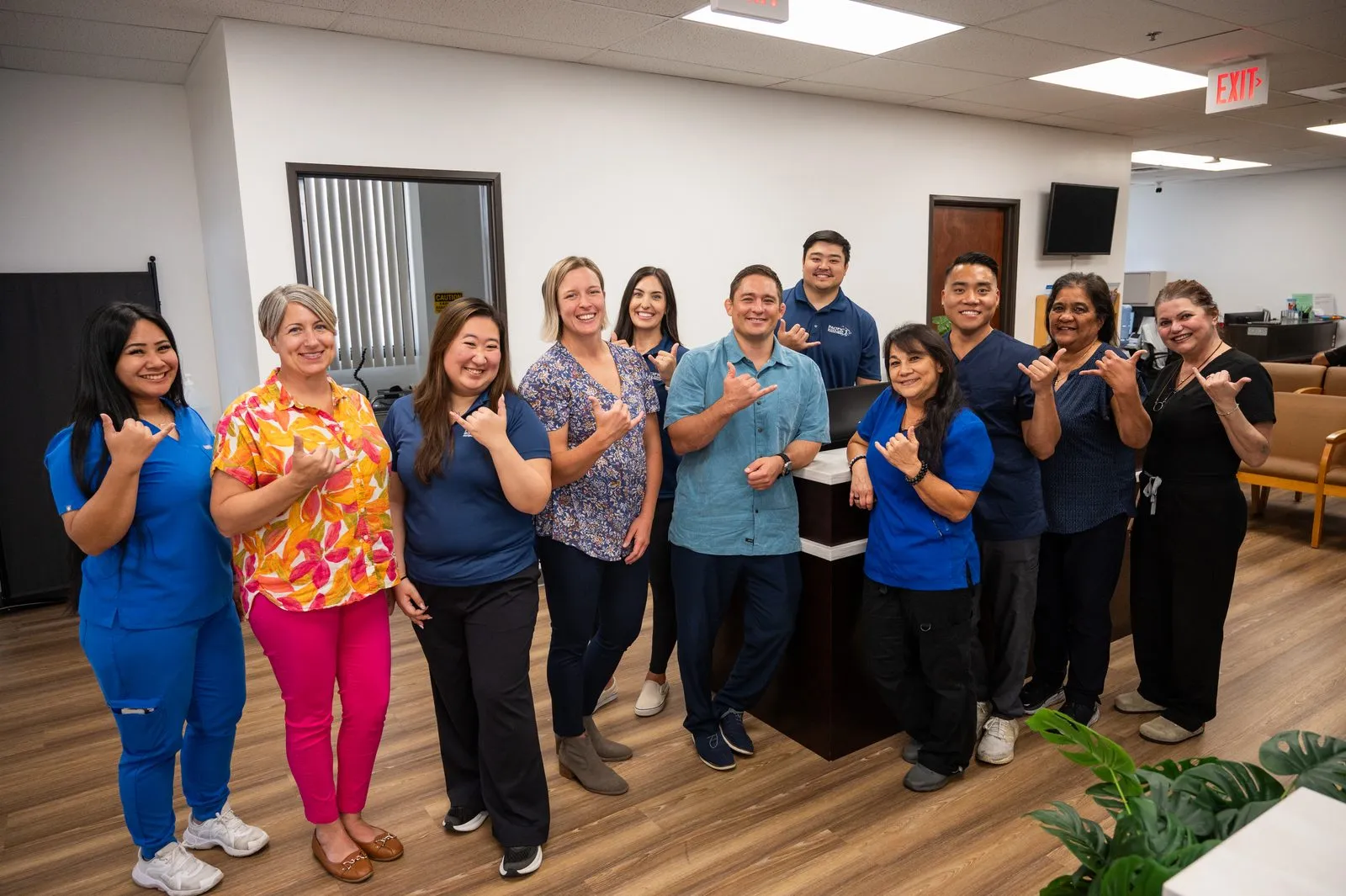
PB&J Physical Therapy works inside our Honolulu and Waipahu/Kunia clinics, so your rehabilitation is planned with the same orthopedic team that treats you. Many orthopedic problems improve with therapy alone, and Hawai‘i allows direct access to physical therapy without a physician referral (some plans still require one for coverage).
PB&J Physical Therapy →Questions, Answered
ACL surgery FAQ
Does every ACL tear need surgery?+
No. Some people — especially those with partial tears or lower-demand activities — do well with structured rehab and bracing. Surgery is usually recommended when the knee remains unstable or you want to return to pivoting sports. We review both paths honestly at your evaluation, and non-surgical care is always considered first.
What is the BEAR® implant?+
BEAR (Bridge-Enhanced ACL Restoration) is the first innovation in ACL tear treatment in more than 30 years. Instead of replacing your ACL with a graft, the implant acts as a bridge between the torn ends: the surgeon adds a small amount of your own blood, and the combination helps your body heal its own ACL while keeping its original attachments. As the ligament heals, the implant is resorbed by the body, usually within about eight weeks.
Am I eligible for BEAR repair?+
The BEAR implant is indicated for skeletally mature patients at least 14 years of age with a complete ACL rupture confirmed by MRI, an ACL stump still attached to the tibia, and surgery performed within about 50 days of injury. Timing matters — if you think you may be a candidate, be seen early. Not everyone is eligible; an exam and MRI determine candidacy.
Which graft is best for ACL reconstruction?+
No single graft is best for everyone. Quadriceps-tendon, hamstring, and patellar-tendon autografts each have trade-offs, and Dr. Morton individualizes the choice to your anatomy, sport, and goals — often favoring a quadriceps-tendon autograft with an all-inside, minimally invasive technique when it fits.
When can I get back to sport?+
Return to pivoting sport after ACL reconstruction typically takes many months — often in the range of seven to nine — and is guided by strength and stability testing with our in-house PB&J Physical Therapy team, not just the calendar. Individual timelines vary.
Where is ACL surgery performed?+
Surgery is arthroscopic and typically outpatient. On Oahu, Dr. Morton operates at The Queen's Medical Center and Adventist Health Castle; on the Big Island, at Hilo Community Surgery Center — so you can have surgery and recover close to home.
Injured your ACL? Timing matters.
Some options — like BEAR® repair — are time-sensitive. Start with an evaluation and we'll walk you through every path, surgical and non-surgical, honestly.
For medical emergencies, call 911. This page is educational and is not a substitute for medical advice. Not everyone is a candidate; individual results and recovery vary.