
U.S. adults 50+ with osteoporosis or low bone mass1
Women over 50 will break a bone from osteoporosis1
Men over 50 will break a bone from osteoporosis1
No symptoms until a fracture — screening finds it first
Source: Bone Health & Osteoporosis Foundation. Full citations in Evidence & References below.
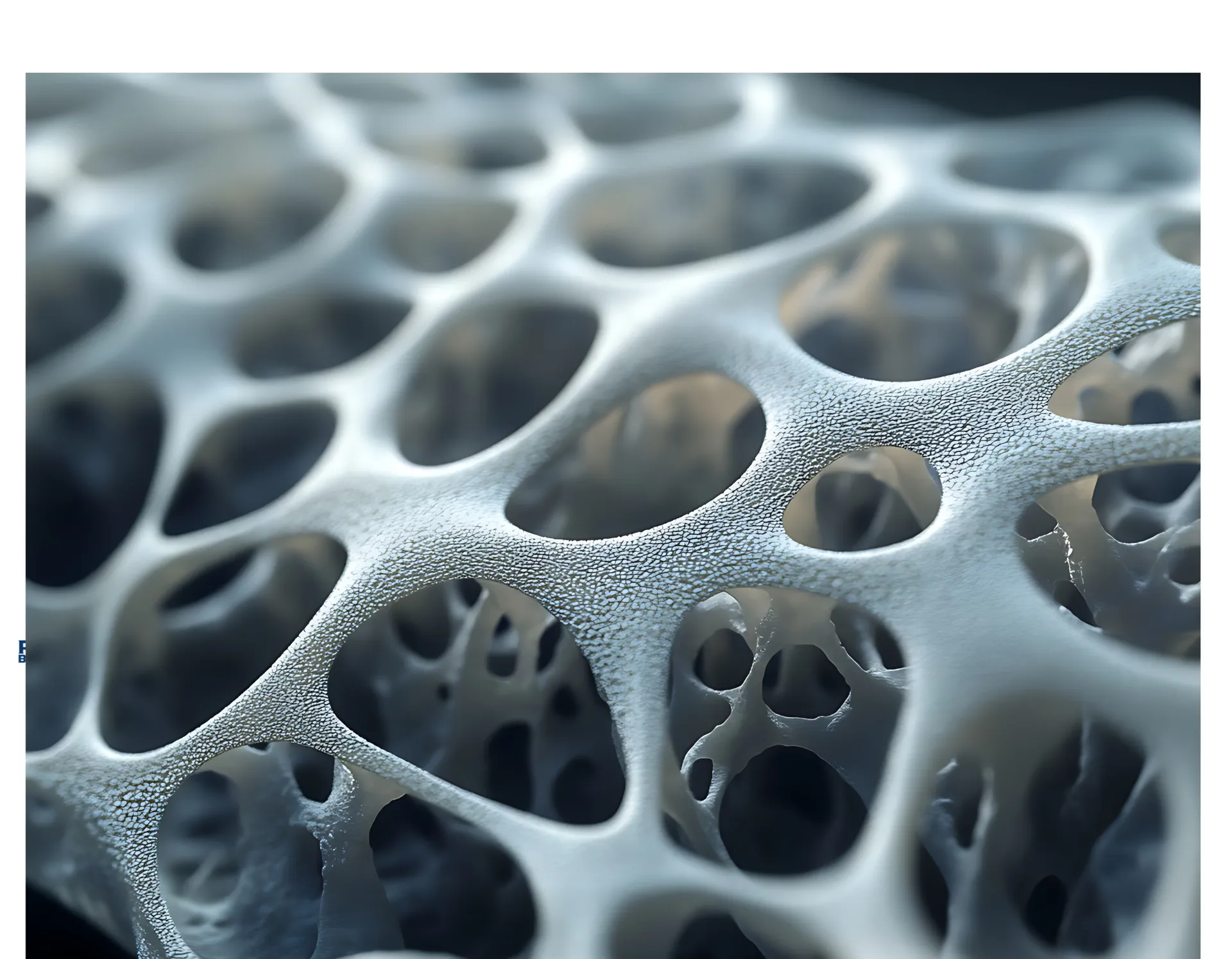
Our Services
Comprehensive bone health care
From diagnosis to long-term management, our specialist-led team provides the full spectrum of bone health care — integrated with in-house physical therapy and on-site imaging.
Diagnosis & management
A specialist reviews your bone density, fracture history, labs, and risk factors to build a personalized plan — not a generic protocol.
Bone-building medications
We administer and manage FDA-approved injectable and infusion therapies in-office — no separate infusion-center visit.
Fracture & fall prevention
Fractures often start with a fall. Our integrated approach pairs bone treatment with fall-risk screening and targeted physical therapy.
Bone-Building Medications
The right medication for your situation
Not every osteoporosis medication is right for every patient. Your specialist weighs your bone density, labs, fracture history, and overall health — then manages your therapy in-office.
Prolia
denosumabEvery 6 months · In-office injection
A monoclonal antibody that reduces bone breakdown — one of the most prescribed therapies for postmenopausal women at high fracture risk.
In the pivotal FREEDOM trial, associated with about 68% fewer new spine fractures over three years vs placebo.4 Individual results vary.
Covered by Medicare Part B*Evenity
romosozumabMonthly · 12-month course
A newer medication that builds new bone and reduces breakdown at once — used for patients at very high fracture risk who need rapid density gains.
In the ARCH trial, followed by an oral therapy it lowered fracture risk more than that oral therapy alone in high-risk women.6 Individual results vary.
Covered by Medicare Part B*Reclast
zoledronic acidOnce yearly · IV infusion
An annual intravenous bisphosphonate — one of the most durable therapies available. A single 15-minute infusion covers a full year.
In the HORIZON trial, associated with about 70% fewer spine fractures and 41% fewer hip fractures over three years.5 Individual results vary.
Covered by Medicare Part B**Coverage depends on your plan and eligibility; our team verifies benefits before treatment. Your specialist will review the benefits and risks of each option with you. Not everyone is a candidate.
Why Pacific Bone & Joint
Specialist expertise for a condition too often under-managed
Musculoskeletal specialists
Bone is our specialty — the same diagnostic rigor we bring to complex fracture and joint care.
Physical therapy on-site
Our in-house PT team designs fall-prevention and strength programs — not a separate referral.
Insurance handled for you
Medicare and most Hawaii plans accepted. We verify your coverage before treatment.
4 locations across Hawai‘i
Ala Moana, Waipahu, Hilo, and Kona — with interisland coordination available.

Evidence & Research
What the evidence says about bone health & osteoporosis
Osteoporosis is common, silent, and — importantly — treatable. Here is a plain-language summary of what national bone-health organizations and pivotal clinical trials report, with honest context.
Osteoporosis is common and often silent. The Bone Health & Osteoporosis Foundation estimates about 54 million U.S. adults age 50 and older have osteoporosis or low bone mass, and that roughly 1 in 2 women and up to 1 in 4 men over 50 will break a bone because of it.1
Fragility fractures are serious. Six months after a hip fracture, only about 15% of patients can walk across a room unaided — which is why identifying and treating risk early matters so much.2
A treatment gap persists: many people at high risk are never evaluated or treated for osteoporosis until after their first fracture, even though effective therapies exist.3
Treatment works. In the pivotal FREEDOM trial, denosumab (Prolia) reduced the relative risk of new spine fractures by about 68% and hip fractures by about 40% over three years compared with placebo.4
In the HORIZON trial, once-yearly zoledronic acid (Reclast) reduced new spine fractures by about 70% and hip fractures by about 41% over three years compared with placebo.5
In the ARCH trial, romosozumab (Evenity) followed by alendronate reduced fracture risk more than alendronate alone in postmenopausal women at high fracture risk.6
Medication choice depends on your bone density, labs, fracture history, and overall health; not every therapy is right for every patient, and your specialist will review the benefits and risks with you. Coverage varies by plan. Not everyone is a candidate, and individual results vary. This page is educational and is not a substitute for medical advice.
References
- Bone Health & Osteoporosis Foundation. What Is Osteoporosis and What Causes It? Accessed 2026. View source ↗
- Bone Health & Osteoporosis Foundation. Osteoporosis Fast Facts. Accessed 2026. View source ↗
- LeBoff MS, Greenspan SL, Insogna KL, et al. The Clinician's Guide to Prevention and Treatment of Osteoporosis (Bone Health & Osteoporosis Foundation). Osteoporos Int. 2022. View source ↗
- Cummings SR, San Martin J, McClung MR, et al. Denosumab for prevention of fractures in postmenopausal women with osteoporosis. N Engl J Med. 2009;361(8):756–765. View source ↗
- Black DM, Delmas PD, Eastell R, et al. Once-yearly zoledronic acid for treatment of postmenopausal osteoporosis. N Engl J Med. 2007;356(18):1809–1822. View source ↗
- Saag KG, Petersen J, Brandi ML, et al. Romosozumab or alendronate for fracture prevention in women with osteoporosis. N Engl J Med. 2017;377(15):1417–1427. View source ↗
Bone Health: Treatment & Prevention Outcomes
Evidence-based results for osteoporosis screening, medication, and fracture prevention.
2-Minute Check
Am I a candidate for a bone health evaluation?
Answer a few quick questions. This is educational and is not a diagnosis — only an evaluation can tell for sure.
Are you over 50, post-menopausal, or have you broken a bone as an adult?
Do you have a family history of osteoporosis or a low bone-density (DEXA) result?
Have you not had a recent fracture-risk or bone-health evaluation?
You may be a strong candidate.
Your answers suggest a bone health evaluation could be a good fit. The next step is a simple evaluation, where we'll confirm with an exam and imaging and review every option with you — surgical and non-surgical.
This tool is educational and not a diagnosis. Not everyone is a candidate; only a clinical evaluation can determine what's right for you.
You might be a candidate — let's talk.
Some of your answers point toward a bone health evaluation, but the right path depends on the details. A short evaluation will give you a clear, honest answer and a plan.
This tool is educational and not a diagnosis. Not everyone is a candidate; only a clinical evaluation can determine what's right for you.
Let's take a closer look.
Your answers don't point clearly to a bone health evaluation yet — but that doesn't mean we can't help. We'll evaluate what's going on and point you to the care that fits, often starting with non-surgical options.
This tool is educational and not a diagnosis. Not everyone is a candidate; only a clinical evaluation can determine what's right for you.
Answer all 3 questions to see your result.
Patient Reviews
What patients say
4.9 average across 509 ratings on 8 review sites
“He did my mom’s hip surgery when she had a nasty fall at home, and he has taken care of her ever since. My mom is 98 years old and he provides excellent care. We highly recommend Dr. Morton!”
— Joyce Y.· Google review
“My forearm bone repair was done well and provided full healing. I’m a pilot and amateur athlete, and I do not take my body’s health for granted. Dr. Morton is professional, knowledgeable, and enthusiastic.”
— Paul C.· Google review
Review excerpts reflect individual patient experiences and may be lightly condensed. Results vary.
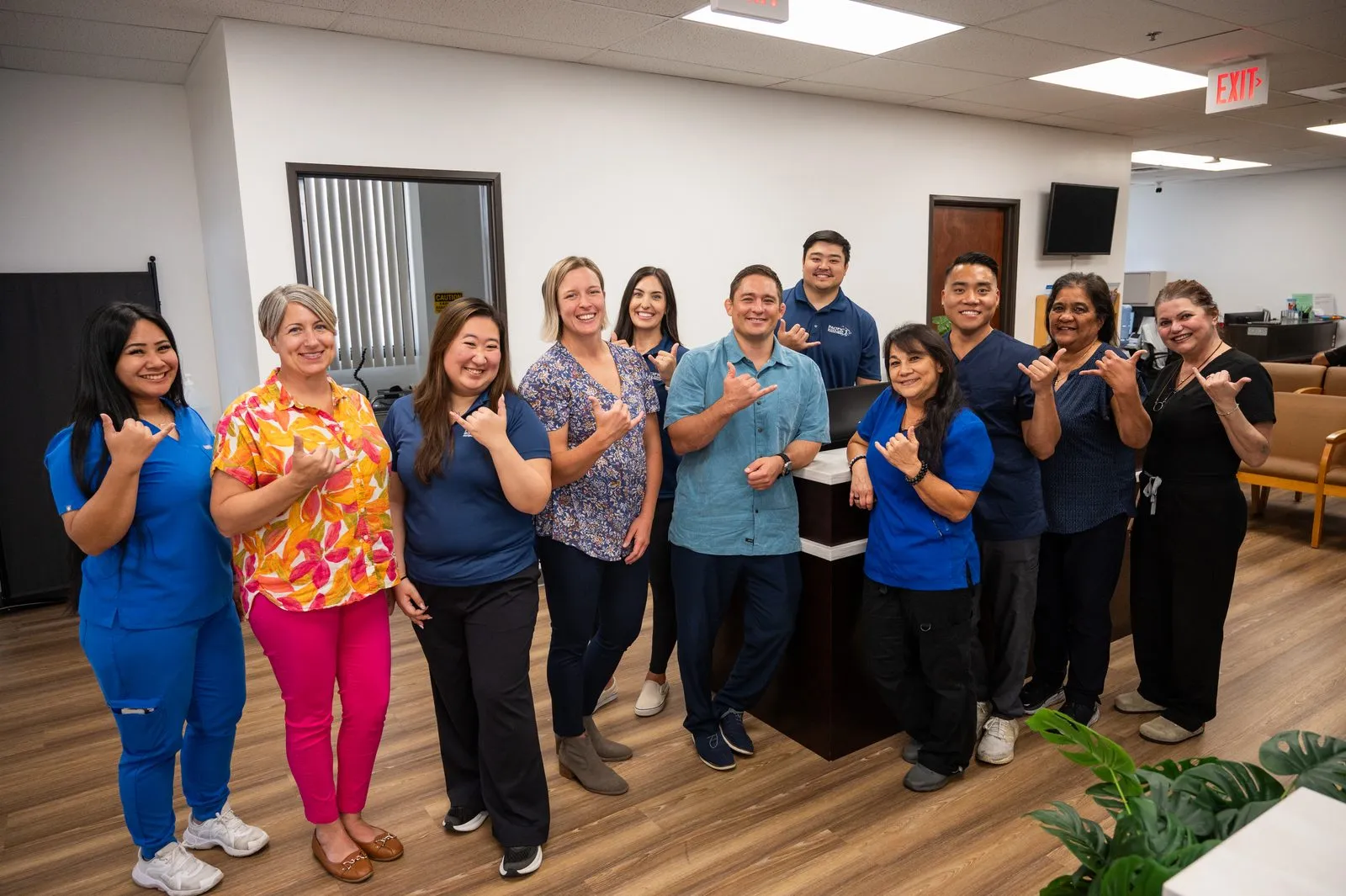
Rehabilitation & Recovery
Physical therapy for bone health
PB&J Physical Therapy works inside our Honolulu and Waipahu/Kunia clinics, so your rehabilitation is planned with the same orthopedic team that treats you. Many orthopedic problems improve with therapy alone, and Hawai‘i allows direct access to physical therapy without a physician referral (some plans still require one for coverage).
PB&J Physical Therapy →Questions, Answered
Bone health FAQ
Does osteoporosis have symptoms?+
Usually not. Osteoporosis is often called a “silent” disease because it typically causes no pain until a bone breaks. That’s why a bone-density (DEXA) scan and fracture-risk assessment matter — they can identify risk before a fracture happens.
Is osteoporosis treatment covered by insurance?+
Bone-density testing and FDA-approved osteoporosis medications such as Prolia, Reclast, and Evenity are covered by Medicare and most Hawaii insurance plans for eligible patients. Our team verifies benefits before treatment. Coverage varies by plan.
Which osteoporosis medication is right for me?+
There’s no one-size-fits-all answer. Your specialist reviews your bone density, labs, fracture history, and overall health to recommend an option — an injection every six months (Prolia), a monthly bone-building course (Evenity), or a once-yearly infusion (Reclast) — and manages it in-office. Not every medication is appropriate for every patient.
Do I need a referral or a recent DEXA scan?+
You don’t need a referral to schedule an evaluation, and you don’t need to have had a scan first — we can arrange bone-density testing as part of your work-up. If you’ve had a recent DEXA scan or a fragility fracture, bring those results so we can build your plan faster.
Explore Related Care
Related care
Physical Therapy
Fall-prevention & balance programs to protect your bones.
Explore →PrescribeFIT
Coaching to build lasting bone & joint health.
Explore →Regenerative Medicine
Physician-guided options for selected patients.
Explore →Robotic Joint Replacement
When arthritis, not bone density, is the problem.
Explore →Don't wait for a fracture to find out
A single consultation can identify your risk, clarify your options, and start a treatment plan — before a fall changes everything.
Covered by Medicare and most plans for eligible patients. Not everyone is a candidate; individual results vary. This page is educational and is not a substitute for medical advice.