
 Written and medically reviewed by Paul Norio Morton, MD, FAAOS, FAAHKS · Board-certified orthopedic surgeon · Last reviewed July 2026
Repair Over Removal
Why we work to save the meniscus
The meniscus spreads load across the knee and shields the smooth articular cartilage from wear. Removing meniscus tissue can accelerate that wear over time — so when a tear is repairable, repair is preferred over removal.
Meniscus root tears deserve special attention: biomechanically, an untreated root tear can behave much like removing the whole meniscus, raising the risk of rapid cartilage loss. Root repair is designed to re-anchor the meniscus and restore its natural "hoop stress" function.
How we approach a torn meniscus
- Arthroscopic meniscus repair to preserve tissue when the tear pattern allows.
- Meniscus root repair to re-anchor the meniscus and protect your cartilage.
- Conservative partial meniscectomy — removing only the damaged fragment — when repair isn't possible.
- Considered alongside cartilage restoration as part of a joint-preservation plan.
Not every tear is repairable. The best option depends on the tear type, location, and tissue quality.
An Honest Framework
Which tears can be repaired — and which can't
Healing needs blood supply, and the meniscus only has it near its outer rim. That's why repairability depends on where and how the meniscus tore — not on how much we'd like to save it.
Often repairable
Tears in the outer, blood-supplied rim; root tears; and many acute tears in younger patients with good tissue quality — especially when treated early or alongside ACL surgery.
Case by case
Complex tear patterns and tears extending toward the inner zone. The final call is often made at arthroscopy, when the surgeon can see the tear and test the tissue directly.
Usually not repairable
Tears in the inner zone with little blood supply, and frayed degenerative tissue. Here a conservative partial meniscectomy — trimming only the damaged fragment — relieves symptoms while preserving the rest.
Degenerative tears in arthritic knees are a special case: for many, structured physical therapy works as well as surgery, so we start there. If the whole knee compartment is worn, joint preservation or partial knee replacement may be the more honest conversation.
What To Expect
From diagnosis to recovery
Confirm the diagnosis
A focused exam and, when needed, an MRI identify the tear type, location, and whether the rest of the knee — cartilage and ligaments — is involved.
Exhaust simpler options
Many tears, especially degenerative tears in arthritic knees, are treated first with activity changes, physical therapy, and sometimes injections. Surgery is for the tears that need it.
Arthroscopic surgery
Through small incisions with a camera, the tear is repaired when possible — or trimmed conservatively when it isn’t. Typically outpatient; most patients go home the same day.
Guided recovery
Rehab with our in-house PB&J Physical Therapy team. Repairs are protected while they heal, so recovery is slower than after a trim — but the payoff is a preserved meniscus.
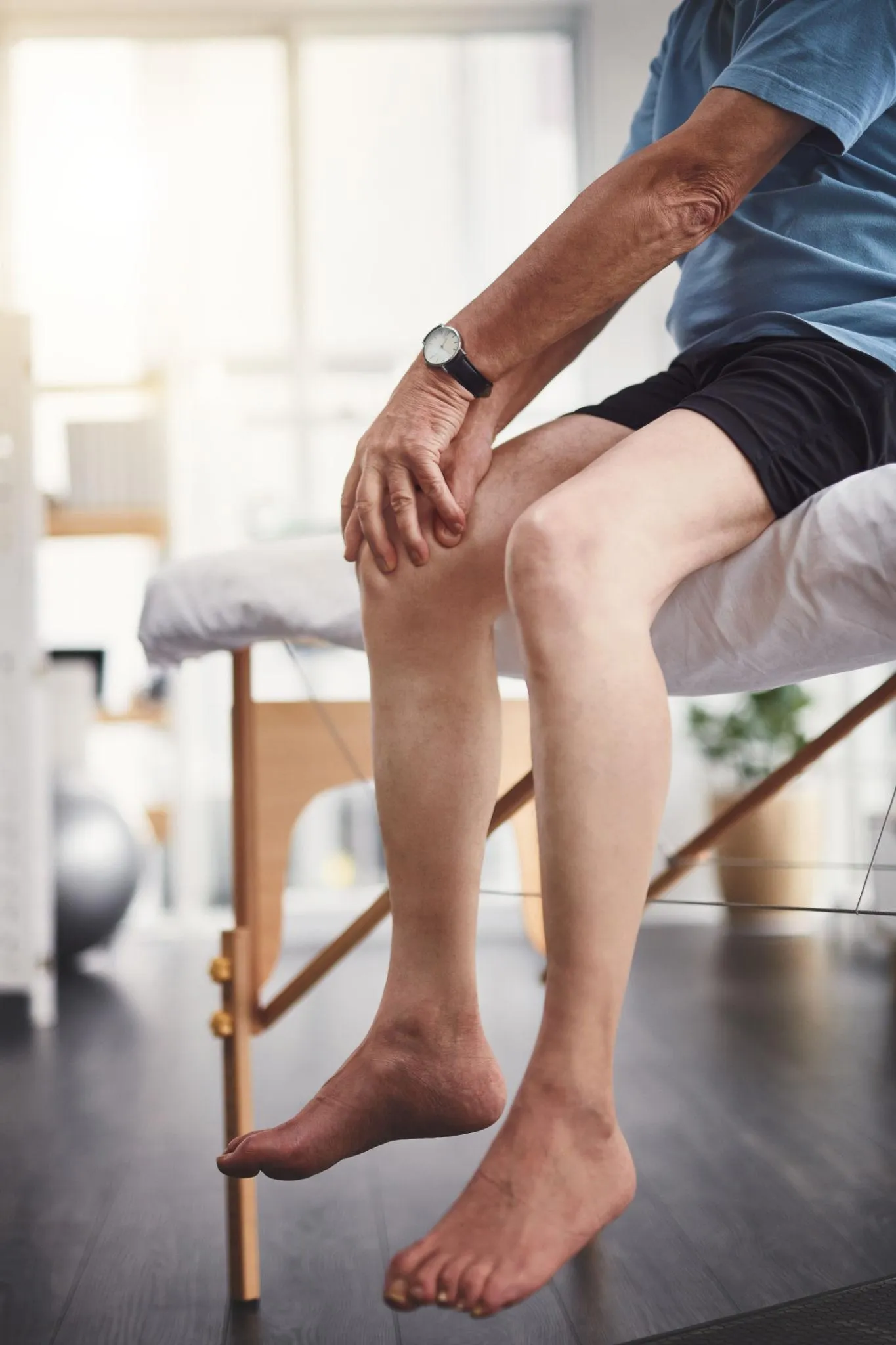
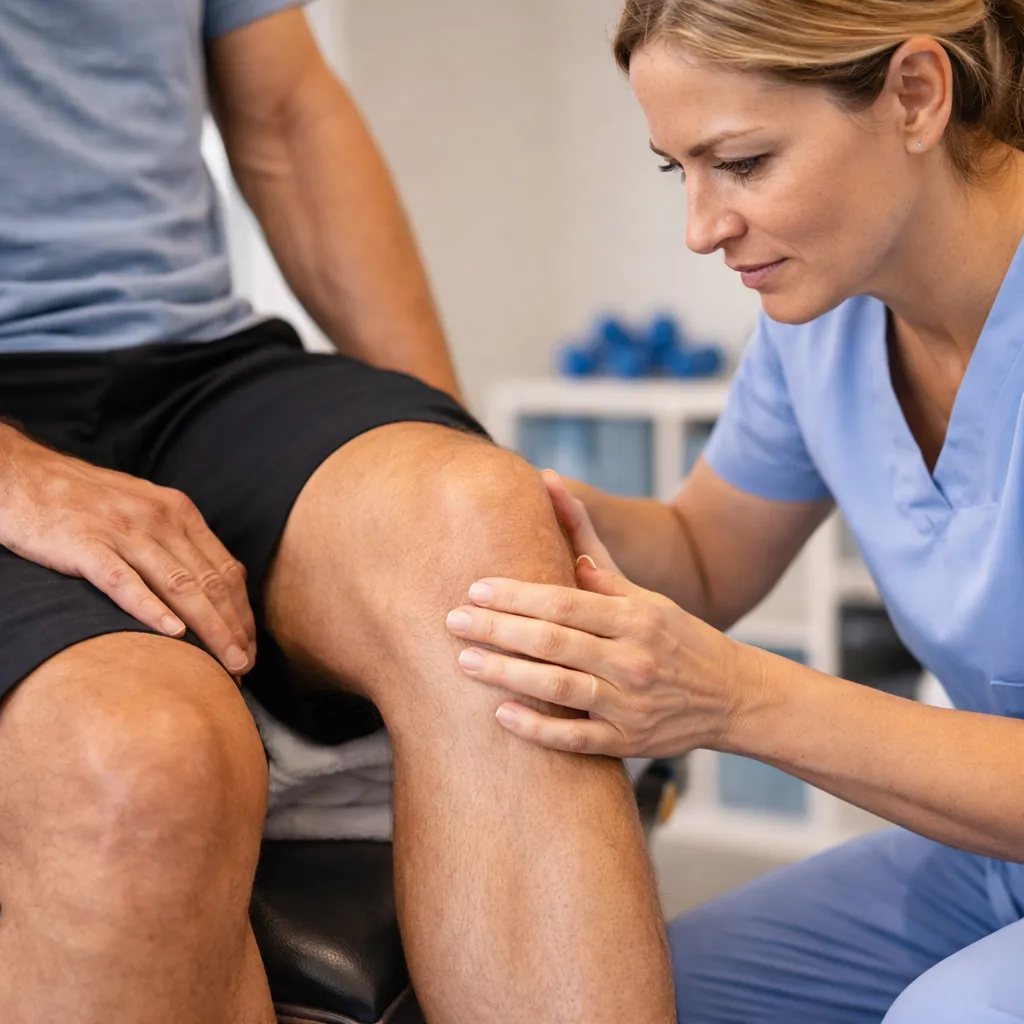
On Oahu, surgery is performed at The Queen's Medical Center and Adventist Health Castle; on the Big Island, at Hilo Community Surgery Center. Eligibility for outpatient surgery depends on your health and procedure.
Honest Expectations
What are the risks of meniscus surgery?
Knee arthroscopy is a low-risk operation, but it is not risk-free — and a repair asks more of your recovery than a trim. Here is what the American Academy of Orthopaedic Surgeons lists, in plain language.
The repair may not heal
Repaired meniscus tissue does not always heal, especially in zones with a poor blood supply or when the tissue is worn. A failed repair can mean a return of symptoms and a second arthroscopy, sometimes to remove the torn portion.
Stiffness
Protecting a repair means limiting motion or weight-bearing for a period, and some patients develop stiffness that takes time and therapy to resolve.
Infection
Infection after arthroscopy is uncommon but can occur and may require antibiotics or further surgery.
Blood clots
Clots in the leg veins can form after knee surgery and can travel to the lungs. Early movement and, when indicated, blood thinners reduce this risk.
Nerve irritation or numbness
Small skin nerves near the incisions can be irritated, leaving patches of numbness that usually improve over time.
Persistent pain, swelling, or arthritis over time
Some knees remain painful or swollen after surgery, and a meniscus injury raises the long-term risk of arthritis regardless of how it is treated.
How we work to lower your risk
- Repair is chosen only when the tear pattern, location, and tissue quality give it a real chance to heal — otherwise only the damaged fragment is removed
- A protocol specific to repair versus meniscectomy, so weight-bearing and motion limits protect the healing tissue
- Rehabilitation with our in-house PB&J Physical Therapy team on Oahu, working from your surgeon’s plan
Source: American Academy of Orthopaedic Surgeons, OrthoInfo — Meniscus Tears and Knee Arthroscopy. Every patient’s risk is different. Dr. Morton reviews your individual risks and benefits — based on your health, anatomy, and history — before any decision about surgery.
2-Minute Check
Am I a candidate for meniscus repair?
Answer a few quick questions. This is educational and is not a diagnosis — only an evaluation can tell for sure.
Do you have knee pain, swelling, or catching with activity?
Are you relatively young or active and hoping to avoid a joint replacement?
Has a provider mentioned focal cartilage or meniscus damage (rather than widespread arthritis)?
You may be a strong candidate.
Your answers suggest meniscus repair could be a good fit. The next step is a simple evaluation, where we'll confirm with an exam and imaging and review every option with you — surgical and non-surgical.
This tool is educational and not a diagnosis. Not everyone is a candidate; only a clinical evaluation can determine what's right for you.
You might be a candidate — let's talk.
Some of your answers point toward meniscus repair, but the right path depends on the details. A short evaluation will give you a clear, honest answer and a plan.
This tool is educational and not a diagnosis. Not everyone is a candidate; only a clinical evaluation can determine what's right for you.
Let's take a closer look.
Your answers don't point clearly to meniscus repair yet — but that doesn't mean we can't help. We'll evaluate what's going on and point you to the care that fits, often starting with non-surgical options.
This tool is educational and not a diagnosis. Not everyone is a candidate; only a clinical evaluation can determine what's right for you.
Answer all 3 questions to see your result.
Research & Evidence
Why preservation is worth the extra effort
The meniscus protects cartilage
The meniscus shares load across the knee. Losing meniscus tissue concentrates stress on the articular cartilage, which is associated with faster joint wear over time — the biomechanical case for repair when the tear allows.
Root tears change the math
Biomechanical studies suggest an untreated root tear can function much like a total meniscectomy, and that root repair can restore more normal joint mechanics in appropriate patients.
Surgery isn't always better
For degenerative tears in knees with arthritis, randomized trials have found structured exercise therapy performs comparably to arthroscopic surgery for many patients — which is why we try conservative care first.
Educational summaries simplified from the orthopedic literature; not a promise of results. Candidacy is individualized. Key references: Allaire R, et al. J Bone Joint Surg Am. 2008;90(9):1922–1931 (meniscus root biomechanics); Kise NJ, et al. BMJ. 2016;354:i3740 (exercise therapy vs. arthroscopic partial meniscectomy for degenerative tears).

Written and Medically Reviewed By
Paul Norio Morton, MD
Board-certified orthopedic surgeon (American Board of Orthopaedic Surgery). Fellowship-trained; Hawai‘i's first fellowship-trained robotic hip & knee replacement surgeon.
Last reviewed July 2026 · Read Dr. Morton's full bio →
Explore Related Care
Explore related care
Cartilage Restoration
MACI, CartiHeal & joint-preserving surgery — often planned alongside meniscus repair.
Explore →ACL Surgery & BEAR® Repair
Meniscus tears often accompany ACL injuries and are treated at the same surgery.
Explore →Sports Medicine
Non-operative care, ultrasound-guided diagnosis, and return-to-play planning.
Explore →Physical Therapy
In-house rehab tailored to repair or meniscectomy protocols.
Explore →Patient Reviews
What patients say
4.9 average across 509 ratings on 8 review sites
“I was living in pain for a year with a meniscus tear that another doctor wouldn’t fix for me. Dr. Morton is an awesome surgeon, and Carol saved me from waiting another month by getting all my appointments scheduled.”
— Kim H.· Google review
Review excerpts reflect individual patient experiences and may be lightly condensed. Results vary.
Rehabilitation & Recovery
Physical therapy for meniscus repair
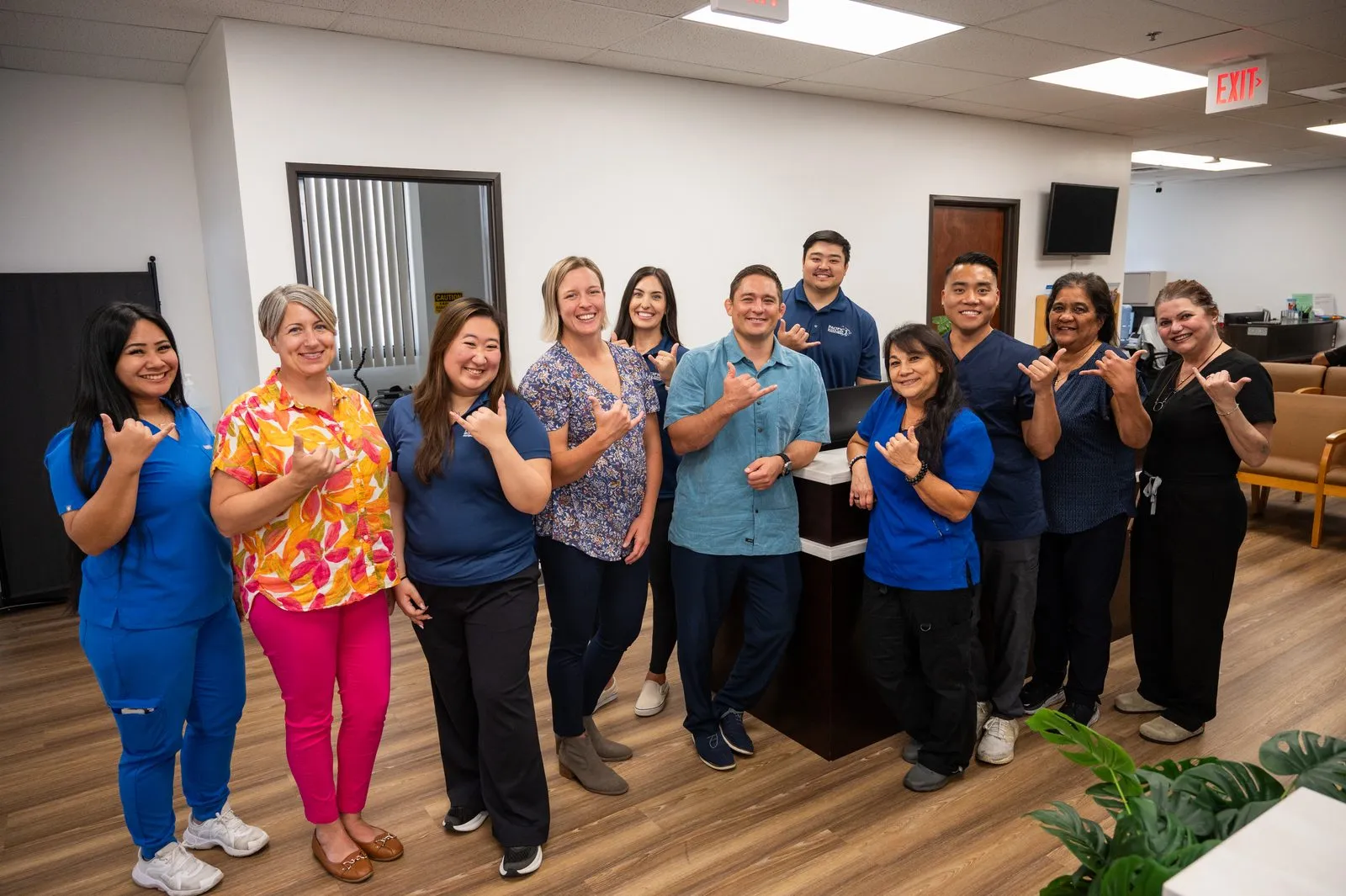
PB&J Physical Therapy works inside our Honolulu and Waipahu/Kunia clinics, so your rehabilitation is planned with the same orthopedic team that treats you. Many orthopedic problems improve with therapy alone, and Hawai‘i allows direct access to physical therapy without a physician referral (some plans still require one for coverage).
PB&J Physical Therapy →Questions, Answered
Meniscus repair FAQ
What does the meniscus actually do?+
Each knee has two menisci — C-shaped pads of fibrocartilage that act as shock absorbers between the thigh and shin bones. They spread load across the joint and protect the smooth articular cartilage underneath. That’s why preserving meniscus tissue matters: losing it can accelerate cartilage wear over time.
Why repair the meniscus instead of just removing the torn part?+
Because the meniscus protects your cartilage, removing tissue trades short-term relief for less protection long-term. When the tear pattern allows, we favor repair — including meniscus root repair — to preserve the meniscus. When repair isn’t possible, we remove only the damaged fragment and keep as much healthy tissue as we can.
Is every meniscus tear repairable?+
No. Repairability depends on the tear type, location, and tissue quality. The outer rim of the meniscus has a blood supply and can heal after repair; the inner portion has little to none, so tears there often cannot heal even if sutured. Your surgeon confirms the best option at arthroscopy.
What is a meniscus root tear, and why does it matter?+
The root is where the meniscus anchors to the bone. Biomechanically, an untreated root tear can behave much like removing the whole meniscus, raising the risk of rapid cartilage loss. Root repair is designed to re-anchor the meniscus and restore its natural "hoop stress" function — protecting the joint in appropriate patients.
Do all meniscus tears need surgery?+
No. Degenerative tears in knees with arthritis often do as well with physical therapy and non-surgical care as with arthroscopy, so we generally start there. Surgery is considered for tears that cause locking or catching, tears in younger or active patients, root tears, and tears that don’t settle with conservative care.
What is recovery like?+
Knee arthroscopy is typically outpatient — home the same day. After a partial meniscectomy, most people progress quickly over weeks. After a repair, the meniscus must be protected while it heals, so weight-bearing and motion are staged over a longer period. Timelines are individual and guided by your therapy team.
Knee catching, locking, or swelling?
Start with an evaluation. We'll figure out whether it's the meniscus, whether it's repairable, and whether you need surgery at all — honestly.
For medical emergencies, call 911. This page is educational and is not a substitute for medical advice. Not everyone is a candidate; individual results and recovery vary.