
Cell-based, for larger defects
Agili-C — FDA-approved 2022
Native cartilage + bone grafts
Minimally invasive, where possible
Cartilage Restoration by the Numbers
Research-backed outcomes for modern cartilage restoration techniques in appropriate patients.
Why Treat It Early
Cartilage doesn't heal itself — so timing matters
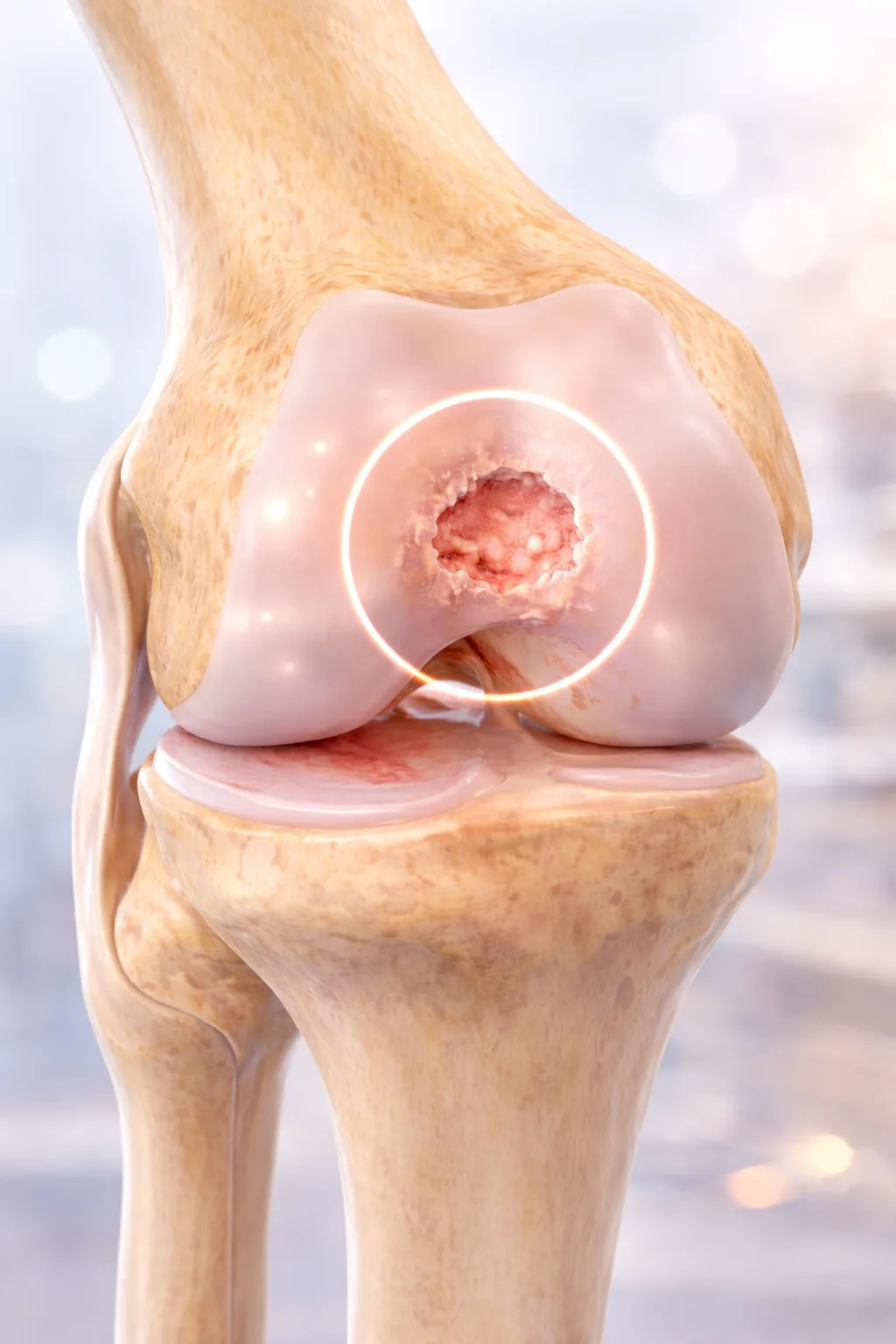
Cartilage is the smooth surface that lets your joint glide without friction. When it's damaged by injury or wear, it doesn't repair well on its own — leading to pain, swelling, catching, and, over time, progressive arthritis.
Restoration is designed to rebuild a smoother surface, reduce pain, and slow that progression — especially valuable for younger, active patients who want to preserve the natural joint.
You may be a candidate if you have
- A focal cartilage injury (not widespread arthritis)
- Knee pain, swelling, or catching with activity
- A younger or active lifestyle
- A goal of avoiding or delaying knee replacement
This list is educational, not a diagnosis. Candidacy is confirmed with imaging and exam.
The Techniques
Matched to your defect — not one-size-fits-all
The right technique depends on the size and depth of the defect, bone involvement, and arthritis status.
MACI
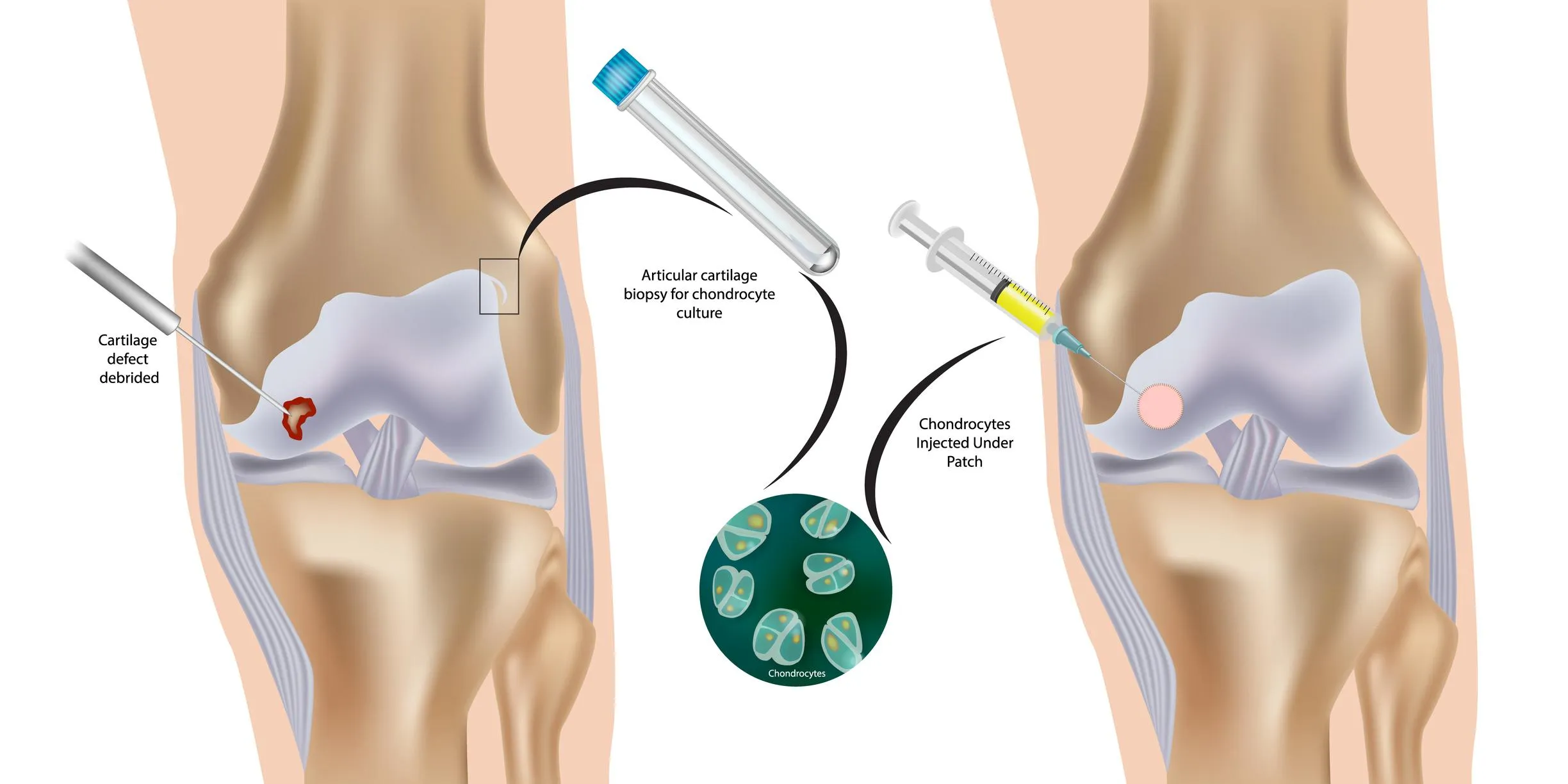
Cell-based · larger defectsMatrix-induced autologous chondrocyte implantation (MACI) is an arthroscopic, cell-based resurfacing — your own cartilage cells are grown on a collagen membrane and implanted through small incisions to resurface larger defects with hyaline-like cartilage. Because MACI is a two-stage procedure — a cartilage biopsy, then arthroscopic implantation — the arthroscopic approach is designed for a faster, less invasive recovery than open surgery. Dr. Morton performed Hawai‘i's first arthroscopic MACI.
CartiHeal (Agili-C)
FDA-approved 2022A scaffold implant that can address cartilage and osteochondral defects — and is uniquely indicated for cartilage and osteochondral defects in knees with mild-to-moderate osteoarthritis, expanding who can be treated.
OATS
Native cartilage + boneOsteochondral autograft/allograft transplantation moves healthy cartilage-and-bone plugs into the defect — excellent for osteochondral lesions where bone is involved.
Microfracture
Small defectsTiny holes in the bone stimulate the body to form new (fibro)cartilage. Best for small lesions in younger patients; durability declines over time, so selection matters.
Allograft transplantation
Larger defectsDonor cartilage restores larger defects when autograft tissue is limited — sized and matched to your joint surface.
See It In Action
Watch: how these procedures work
Short animations of the CartiHeal (Agili-C) implant and the two-stage MACI procedure.
Videos are educational animations from the device manufacturers, not a promise of results. Whether a technique fits your knee is determined by imaging and exam.
The Evidence, Side by Side
Comparing cartilage restoration options
A simplified summary to guide the conversation. Your surgeon will recommend what fits your knee.
| Feature | Microfracture | MACI | OATS | CartiHeal (Agili-C) |
|---|---|---|---|---|
| Tissue formed | Fibrocartilage (scar-like) | Hyaline-like cartilage | Native hyaline + bone | Hyaline-like + bone |
| Best lesion size | < 2 cm² | > 2 cm² | 1–4 cm² (autograft) | Small to large |
| Durability* | Declines after 2–5 yrs | Gains maintained at 5 yrs in a randomized trial | Durable long-term in selected patients | Strong 2–5 yr; 10 yr TBD |
| Early arthritis | Not effective | Not indicated | Limited use | May be effective |
| FDA status (U.S.) | Standard technique | Approved | Approved | Approved (2022) |
*Figures are approximate ranges summarized from the orthopedic literature and are provided for education only. Outcomes depend on defect size, location, bone involvement, activity level, and rehabilitation. Individual results vary. Figures reflect ranges reported across the orthopedic literature.
Why the meniscus matters to your cartilage
The meniscus is the knee's shock absorber and protects the cartilage underneath it, so a cartilage-restoration plan often includes preserving or repairing the meniscus at the same time. When a tear is repairable, repair is preferred over removal.
Meniscus Preservation
Meniscus repair & root repair
- Arthroscopic meniscus repair to preserve tissue when the tear pattern allows.
- Meniscus root repair to re-anchor the meniscus and protect your cartilage.
- Considered alongside cartilage restoration as part of a joint-preservation plan.
Not every tear is repairable. The best option depends on the tear type, location, and tissue quality.
Honest Expectations
What are the risks of cartilage restoration?
Cartilage restoration is designed to preserve your natural knee, but these are demanding procedures with a long recovery. Here is what to weigh, drawn from the American Academy of Orthopaedic Surgeons and the published trials behind these techniques.
The graft may not take
Repaired or implanted cartilage can fail to integrate, loosen, or delaminate from the underlying bone. A failed graft can mean a return of symptoms and further surgery.
Graft overgrowth
Cell-based repairs such as MACI can occasionally overgrow the defect (hypertrophy), causing catching or pain that may require an arthroscopic trim.
Stiffness
Protected weight-bearing and motion limits during healing can lead to stiffness or scar tissue (arthrofibrosis) that takes time and therapy to resolve.
Infection and blood clots
Both are uncommon after knee surgery but possible; infection may require antibiotics or further surgery, and clots can travel to the lungs.
Two procedures for MACI
MACI is staged — a cartilage biopsy first, then implantation weeks later — so it involves two operations and two recoveries.
Persistent symptoms and later replacement
Some knees remain painful or swollen, and restoration does not guarantee you will never need a joint replacement; the goal is to delay or avoid it.
How we work to lower your risk
- Careful selection — defect size and depth, alignment, meniscus status, and arthritis stage all determine which technique, if any, is likely to help
- Correcting alignment or repairing the meniscus at the same time when needed, so the new cartilage is protected
- A staged loading progression with our in-house PB&J Physical Therapy team on Oahu, following the graft’s 9-to-12-month maturation
Source: American Academy of Orthopaedic Surgeons, OrthoInfo — Articular Cartilage Restoration; Brittberg et al., Am J Sports Med 2018 (SUMMIT trial). Every patient’s risk is different. Dr. Morton reviews your individual risks and benefits — based on your health, anatomy, and history — before any decision about surgery.
2-Minute Check
Am I a candidate for cartilage restoration?
Answer a few quick questions. This is educational and is not a diagnosis — only an evaluation can tell for sure.
Do you have knee pain, swelling, or catching with activity?
Are you relatively young or active and hoping to avoid a joint replacement?
Has a provider mentioned focal cartilage or meniscus damage (rather than widespread arthritis)?
You may be a strong candidate.
Your answers suggest cartilage restoration could be a good fit. The next step is a simple evaluation, where we'll confirm with an exam and imaging and review every option with you — surgical and non-surgical.
This tool is educational and not a diagnosis. Not everyone is a candidate; only a clinical evaluation can determine what's right for you.
You might be a candidate — let's talk.
Some of your answers point toward cartilage restoration, but the right path depends on the details. A short evaluation will give you a clear, honest answer and a plan.
This tool is educational and not a diagnosis. Not everyone is a candidate; only a clinical evaluation can determine what's right for you.
Let's take a closer look.
Your answers don't point clearly to cartilage restoration yet — but that doesn't mean we can't help. We'll evaluate what's going on and point you to the care that fits, often starting with non-surgical options.
This tool is educational and not a diagnosis. Not everyone is a candidate; only a clinical evaluation can determine what's right for you.
Answer all 3 questions to see your result.
Research & Evidence
Grounded in the science of joint preservation
MACI
An FDA-approved, matrix-based autologous chondrocyte technique studied for larger cartilage defects, with durable outcomes reported in appropriate patients. Results vary.
CartiHeal (Agili-C)
FDA-approved in 2022; a scaffold implant studied for cartilage and osteochondral defects, including knees with mild-to-moderate arthritis. Longer-term data continues to mature.
Meniscus root repair
Biomechanical and clinical studies suggest untreated root tears accelerate cartilage loss, and that repair may better preserve the joint than removal in appropriate patients.
Summaries are educational and simplified from the orthopedic literature; they are not a promise of results. Dr. Morton will review the evidence relevant to your specific case. Key references: Saris D, et al. Am J Sports Med. 2014;42(6):1384–1394 (MACI vs. microfracture — SUMMIT randomized trial); CartiHeal (Agili-C) U.S. FDA premarket approval, 2022; Allaire R, et al. J Bone Joint Surg Am. 2008;90(9):1922–1931 (meniscus root biomechanics).
Restoration vs. Replacement
Two different tools, two different jobs
Cartilage restoration
- Preserves your natural joint
- Best for early, focal damage
- Biologic healing; longer recovery
Joint replacement
- Replaces the damaged joint surface
- Best for advanced arthritis
- Predictable, durable relief
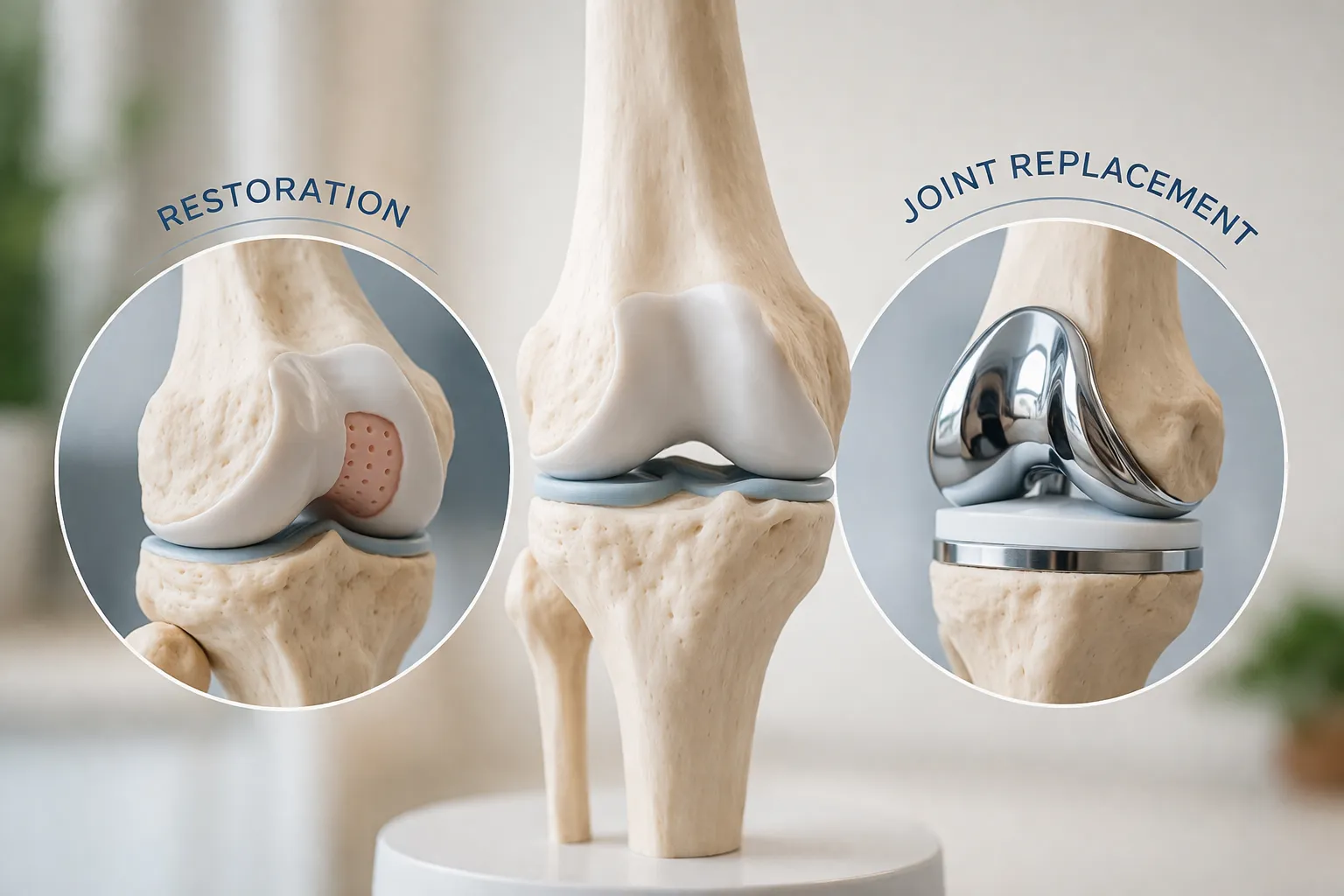
The key idea: cartilage restoration is about buying time and preserving your joint. Because we offer both, our recommendation is guided by what's right for you.
Patient Reviews
What patients say
4.9 average across 509 ratings on 8 review sites
“Before discussing surgery, Dr. Morton had new X-rays taken and took the time to review what I have already done, including physical therapy and a gel injection, as well as where I am now with my pain and mobility. I never felt rushed. I am very grateful to Dr. Morton and the team at Pacific Bone & Joint for making what could have been an overwhelming decision feel much more manageable.”
— Diane N.· Google review
“The therapists carefully explain what each exercise is for and how it helps my recovery, which makes a big difference and keeps me motivated. I really appreciate how knowledgeable and supportive they are. I highly recommend Dr. Morton and the team to anyone with similar knee issues or anyone looking for a great rehabilitation facility after surgery.”
— Kumiko O.· Google review
Review excerpts reflect individual patient experiences and may be lightly condensed. Results vary.
Rehabilitation & Recovery
Physical therapy for cartilage restoration
PB&J Physical Therapy works inside our Honolulu and Waipahu/Kunia clinics, so your rehabilitation is planned with the same orthopedic team that treats you. Many orthopedic problems improve with therapy alone, and Hawai‘i allows direct access to physical therapy without a physician referral (some plans still require one for coverage).
PB&J Physical Therapy →Questions, Answered
Cartilage restoration FAQ
What is cartilage restoration?+
Cartilage restoration is a set of surgical techniques that repair or regenerate damaged joint cartilage — including microfracture, MACI, OATS, and the CartiHeal Agili-C implant. The goal is to relieve pain, restore function, and preserve your natural joint.
What are MACI and CartiHeal?+
MACI is an arthroscopic, cell-based procedure — your own cartilage cells are grown on a collagen membrane and implanted to resurface larger defects with hyaline-like cartilage. CartiHeal (Agili-C) is an FDA-approved implant (2022) that can address cartilage and osteochondral defects, including knees with mild-to-moderate osteoarthritis. Which option fits depends on your defect size, bone involvement, and arthritis status.
Do you repair the meniscus rather than remove it?+
When the tear pattern allows, we favor meniscus repair — including meniscus root repair — to preserve the meniscus, because the meniscus protects your cartilage. Not every tear is repairable; the right choice depends on the tear type, location, and tissue quality.
Will cartilage restoration mean I never need a replacement?+
Cartilage restoration is designed to preserve the natural joint and delay or avoid replacement, especially in younger, active patients with focal damage. Some patients may still need replacement later; restoring cartilage early often provides years of relief first. Individual results vary.
Are these procedures covered by insurance?+
Microfracture and OATS are generally covered by most plans. MACI is FDA-approved and widely covered, though prior authorization may be required. CartiHeal is newer and coverage is evolving. Our team helps verify benefits before your visit.
Want to protect your natural knee?
Start with an evaluation. We'll review imaging together and tell you honestly whether cartilage restoration, meniscus repair, or another path fits you best.
For medical emergencies, call 911. This page is educational and is not a substitute for medical advice. Not everyone is a candidate; individual results and recovery vary.