
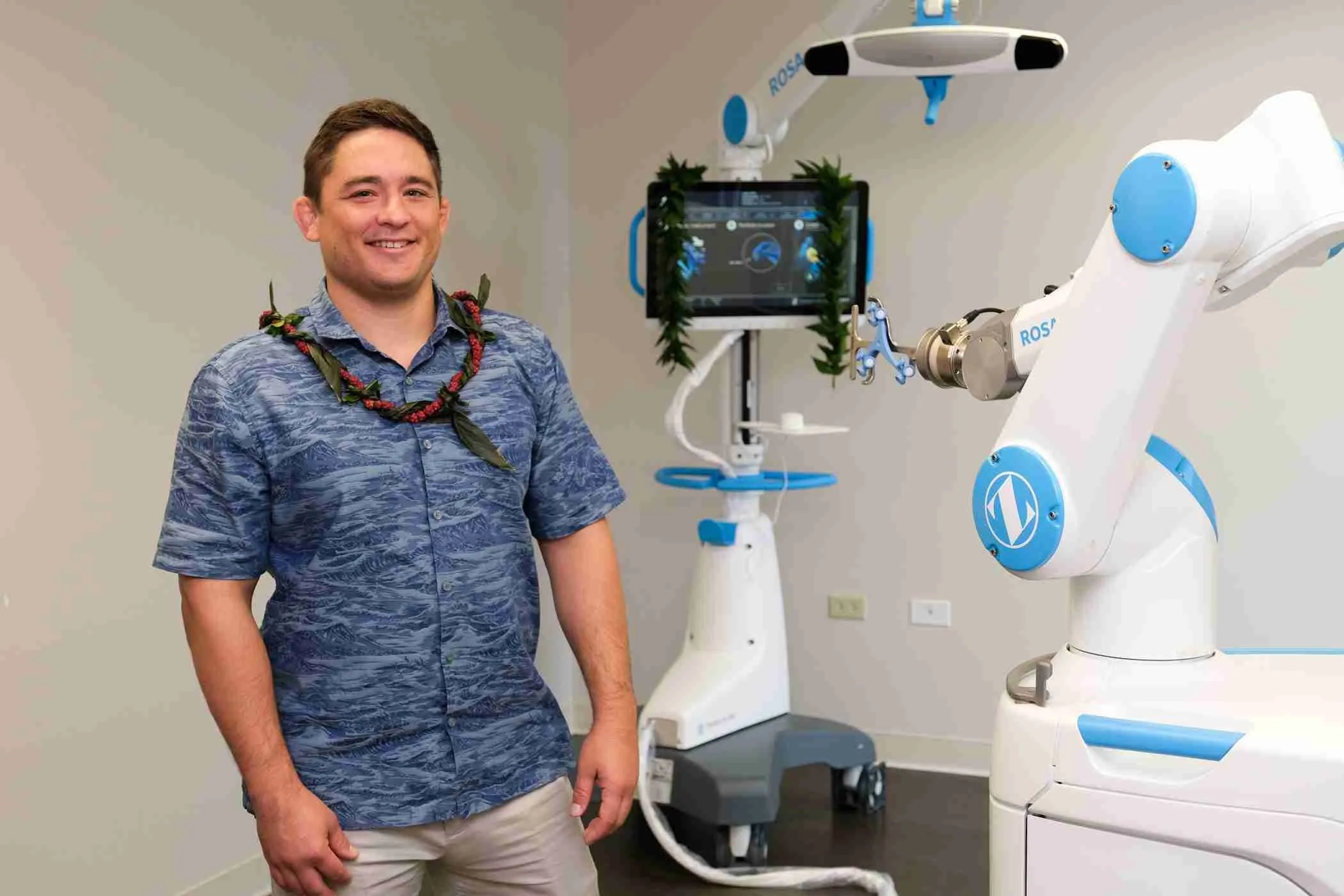
ROSA® · CORI® · MAKO™ robotic assistance
Mapped from your own anatomy
Anterior hip & subvastus knee
Discharge for eligible patients
Robotic-Assisted Joint Replacement by the Numbers
Research-backed outcomes for robotic joint replacement with muscle-sparing techniques.
What It Is
Precision planning, in the surgeon's hands
Robotic-assisted joint replacement begins with a 3D model built from your own imaging. During surgery, the ROSA® system gives Dr. Morton real-time data to help position your implant accurately for your anatomy. It's a tool that supports the surgeon's judgment — not a replacement for it.
- 3D planning from your anatomy for implant alignment tailored to you.
- Real-time intraoperative data to support precise, balanced positioning.
- Muscle-sparing approaches that may support earlier mobility in eligible patients.
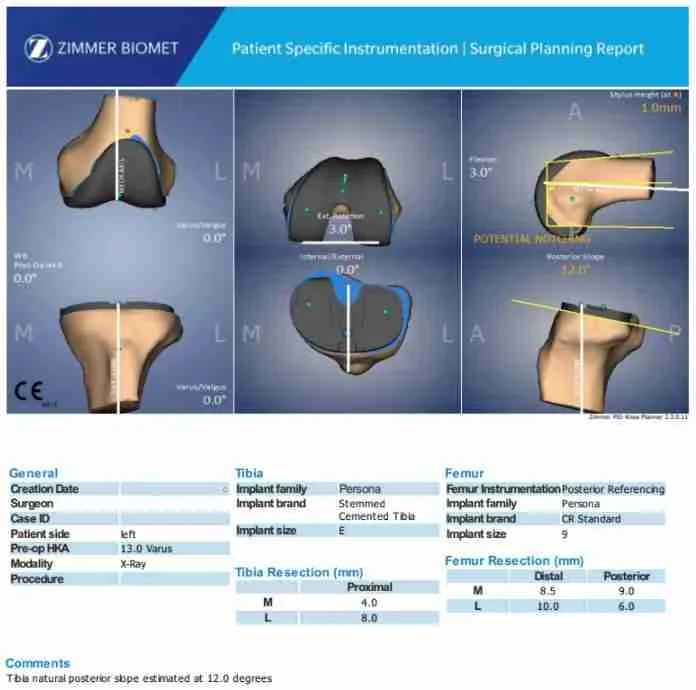
A 3D surgical plan generated before your procedure. For illustration; every plan is individualized.
Muscle-Sparing Techniques
Which surgical approach is right for my hip replacement?
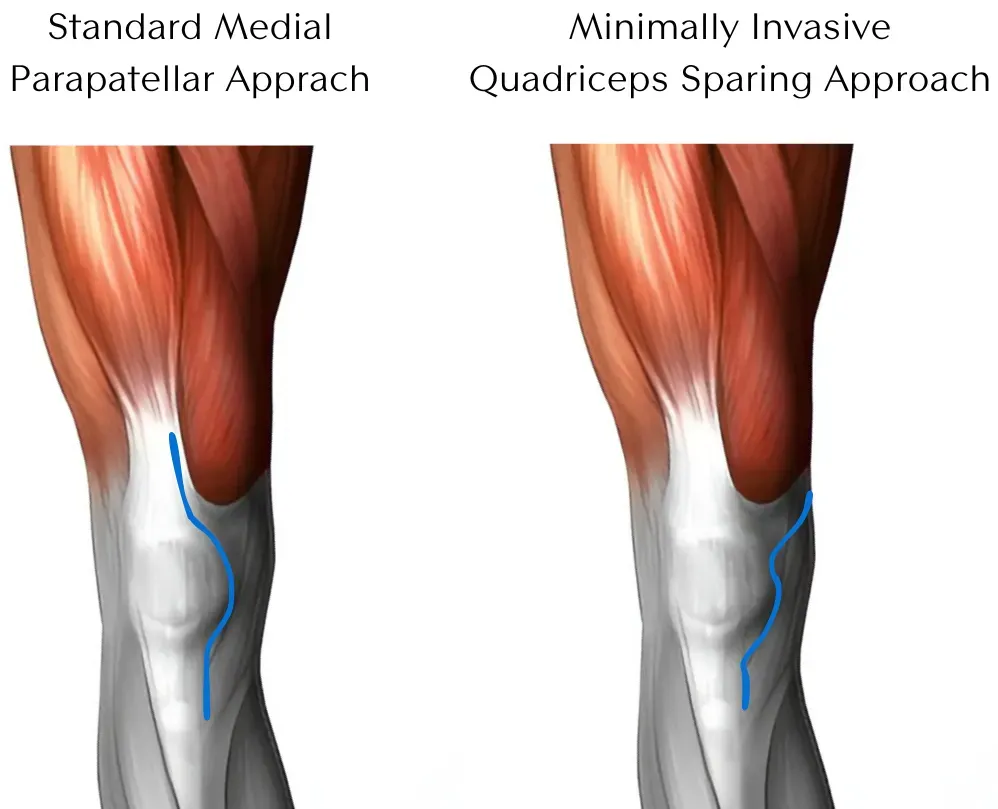
Dr. Morton favors approaches that work around muscles rather than cutting through them. Which is right for you depends on your anatomy and goals.

Setting Expectations
What the robot does — and doesn't — do
ROSA® does
- ✓Build a 3D plan from your imaging
- ✓Provide real-time alignment data during surgery
- ✓Help Dr. Morton position the implant precisely
- ✓Support the surgeon's plan and judgment
ROSA® does not
- ✕Perform your surgery on its own
- ✕Make decisions without the surgeon
- ✕Replace Dr. Morton's training and experience
- ✕Guarantee a specific outcome
Dr. Morton controls every step of your surgery. ROSA® is a registered trademark of Zimmer Biomet.
Am I a Candidate?
Signs it may be time to ask about joint replacement
Joint replacement is usually considered only after non-surgical care has stopped helping. You might be a candidate if you recognize several of these — but only an evaluation can tell for sure.
Check if I'm a Candidate →
- Hip or knee pain that limits walking, stairs, or sleep
- Stiffness that makes everyday activities hard
- Pain relief from medication, injections, or PT is fading
- X-rays show advanced arthritis or joint damage
- You're modifying your life to avoid the pain
This list is educational, not a diagnosis. Not everyone is a candidate for surgery.
Your Journey
What happens before, during, and after robotic joint replacement?
Evaluation
A thorough exam and imaging to confirm whether surgery — or something less — is right for you.
3D planning
Your imaging becomes a 3D surgical plan customized to your anatomy before the day of surgery.
Surgery
Dr. Morton performs your muscle-sparing procedure with ROSA® assistance, controlling every step.
Recovery
Rapid-recovery protocols and in-house PB&J physical therapy guide your return to activity. Same-day discharge for eligible patients.*
*Eligibility for same-day discharge depends on your health, procedure, and home support. Recovery timelines vary by individual.
Watch
Dr. Morton on knee replacement with the ROSA® robot
★★★★★"Dr. Morton did my left hip replacement with the anterior approach — a great experience. My hip is healed and I can move on without hip pain. Mahalo to the whole team!"
— Joanne S., hip replacement patient
Individual patient experience. Results vary; not everyone is a candidate.
Techniques That Set Your Surgery Apart
Muscle-sparing, tourniquet-less, and cementless — by design
Dr. Morton tailors the approach and fixation to you, choosing options designed to reduce trauma and support a faster, more durable recovery in eligible patients.
Anterior (bikini) total hip
A muscle-sparing hip replacement that works between muscle planes, with a "bikini" incision along a natural skin line — designed to support earlier mobility.
Subvastus knee
Goes beneath the quadriceps rather than cutting through it, preserving the extensor mechanism to help you regain control of the leg sooner.
Tourniquet-less knee replacement
Performed without a thigh tourniquet, which may mean less thigh pain and muscle damage and a quicker return of quadriceps strength.
Cementless knee replacement
A press-fit implant your own bone grows into for durable, biologic fixation — an option well-suited to younger, more active patients.
Cementless partial knee
Resurfaces only the worn compartment with cementless fixation — sparing healthy bone, cartilage, and ligaments and preserving a more natural-feeling knee.
Robotic precision
Whichever robotic platform fits your procedure (see below), 3D planning tailors each of these techniques to your unique anatomy for accurate alignment.
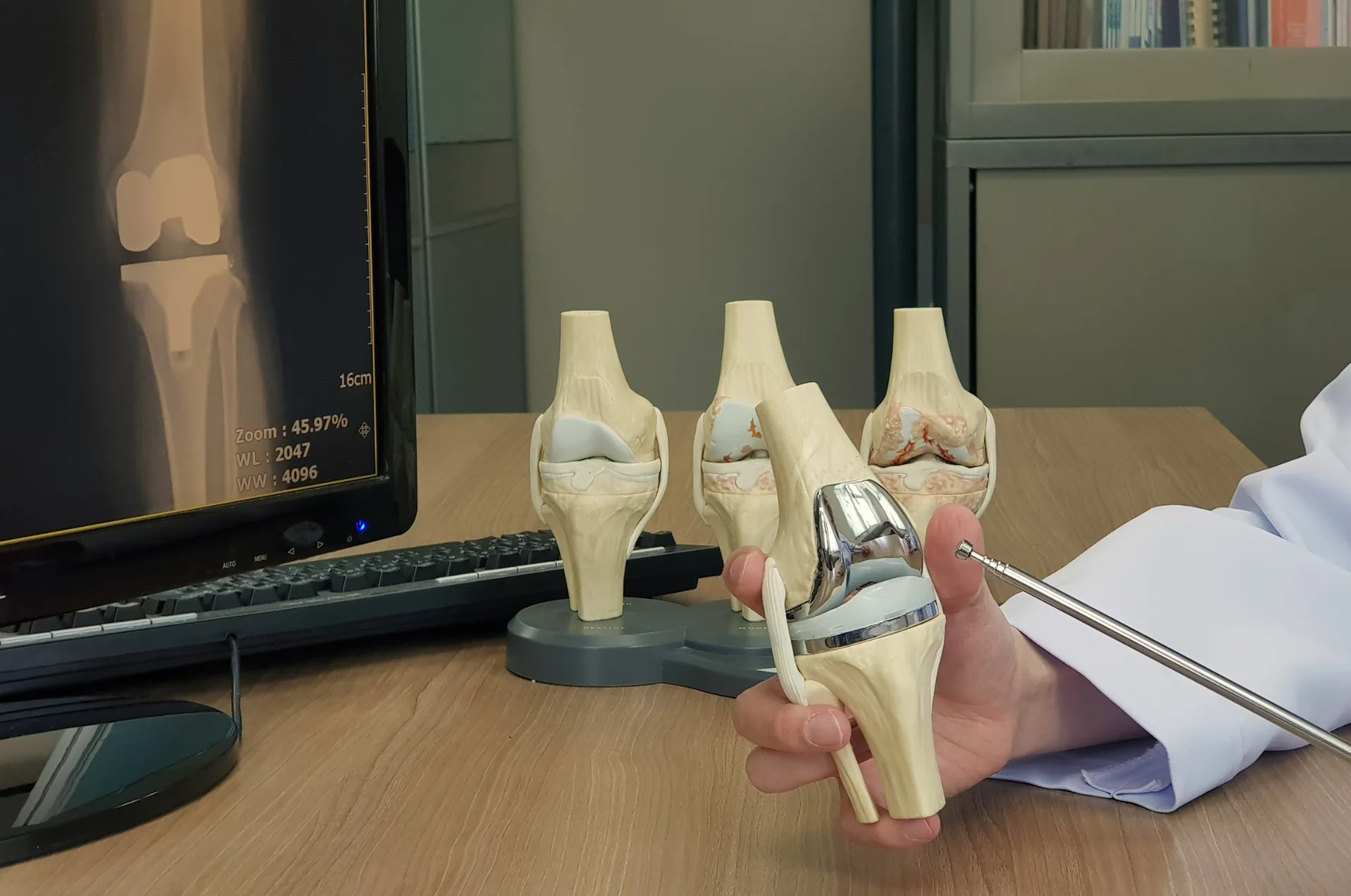
Which approach, fixation, and technique are right for you depends on your anatomy, bone quality, activity level, and goals. Not everyone is a candidate; individual results and recovery vary.
Platform-Agnostic Robotics
We choose the robot that fits you — not the other way around
Dr. Morton is fellowship-trained in robotic joint replacement and operates across today's leading platforms, selecting the right technology for your anatomy and procedure — for both hip and knee. The surgeon, not the robot, performs the surgery; each platform is a different tool for the same job of precise planning and alignment.
Used for robotic total knee replacement, with 3D planning from your imaging and real-time alignment data during surgery.
Used for robotic knee replacement, mapping your anatomy in the operating room to guide precise implant positioning.
A CT-based robotic system used for hip replacement and for total and partial knee replacement, planned from a pre-operative CT scan.
ROSA® (Zimmer Biomet), CORI® (Smith+Nephew), and MAKO™ (Stryker) are trademarks of their respective owners. No robotic system operates independently — Dr. Morton controls every step. Which platform and venue are right for you depends on your procedure, anatomy, and overall health; not everyone is a candidate.
Honest Expectations
What are the risks of hip and knee replacement?
Joint replacement is one of the most successful operations in medicine, but every surgery carries risk. These are the complications the American Academy of Orthopaedic Surgeons lists for hip and knee replacement, in plain language.
Infection
Infection can occur in the wound or deep around the implant — during recovery or, rarely, years later. Deep infection may require further surgery and antibiotics. Preventive antibiotics and sterile technique lower the risk.
Blood clots
Clots in the leg veins (DVT) are among the more common complications after joint replacement and can travel to the lungs. Blood thinners, compression, and early walking reduce this risk.
Implant loosening or wear
Implants can loosen or wear over many years and may eventually need revision. Accurate alignment and modern bearing materials are designed to extend implant life.
Knee stiffness
Scar tissue can limit knee motion after replacement. Early physical therapy is the main safeguard; occasionally a manipulation under anesthesia is needed.
Hip dislocation or leg-length difference
The ball can come out of the socket, most often in the first months. Muscle-sparing approaches and precise component positioning reduce this risk. Small leg-length differences can occur despite careful planning.
Fracture, nerve, or blood-vessel injury
Fracture around the implant, or injury to nearby nerves and blood vessels, is uncommon but can occur during or after surgery and may need additional treatment.
Persistent pain or unmet expectations
A small number of patients have ongoing pain or a result that falls short of what they hoped for, even when the surgery goes as planned.
Anesthesia and medical complications
Heart, lung, kidney, and anesthesia-related complications are more likely in patients with pre-existing conditions, which is why medical clearance is part of preparation.
How we work to lower your risk
- Pre-operative medical clearance and optimization — blood sugar, weight, smoking, dental health
- Preventive antibiotics, sterile technique, and a blood-clot prevention protocol for every patient
- Robotic 3D planning so components are placed accurately within your personalized plan
- Muscle-sparing approaches and same-day mobilization, with rehab run by our in-house PB&J Physical Therapy team on Oahu
Source: American Academy of Orthopaedic Surgeons, OrthoInfo — Total Hip Replacement and Total Knee Replacement. Every patient’s risk is different. Dr. Morton reviews your individual risks and benefits — based on your health, anatomy, and history — before any decision about surgery.
2-Minute Check
Am I a candidate for robotic joint replacement?
Answer a few quick questions. This is educational and is not a diagnosis — only an evaluation can tell for sure.
Do you have hip or knee pain that limits walking, stairs, or sleep?
Have non-surgical treatments (therapy, injections, medication) stopped giving lasting relief?
Have X-rays shown arthritis or joint damage, or has a provider mentioned it?
You may be a strong candidate.
Your answers suggest robotic joint replacement could be a good fit. The next step is a simple evaluation, where we'll confirm with an exam and imaging and review every option with you — surgical and non-surgical.
This tool is educational and not a diagnosis. Not everyone is a candidate; only a clinical evaluation can determine what's right for you.
You might be a candidate — let's talk.
Some of your answers point toward robotic joint replacement, but the right path depends on the details. A short evaluation will give you a clear, honest answer and a plan.
This tool is educational and not a diagnosis. Not everyone is a candidate; only a clinical evaluation can determine what's right for you.
Let's take a closer look.
Your answers don't point clearly to robotic joint replacement yet — but that doesn't mean we can't help. We'll evaluate what's going on and point you to the care that fits, often starting with non-surgical options.
This tool is educational and not a diagnosis. Not everyone is a candidate; only a clinical evaluation can determine what's right for you.
Answer all 3 questions to see your result.
Research & Evidence
Why robotic-assisted, muscle-sparing technique
Precise 3D alignment
Robotic assistance builds a 3D plan from your anatomy and provides real-time data to help position the implant accurately — studies associate robotic assistance with improved alignment accuracy versus conventional technique.*
Muscle-sparing recovery
Paired with anterior-hip and subvastus-knee approaches that work around muscle, this is designed to support earlier mobility in eligible patients. Recovery varies.
Same-day discharge
Many healthy patients are candidates to go home the same day — eligibility depends on your health, your procedure, and your support at home.
*Educational summary; robotic technology assists the surgeon and does not perform surgery independently. Comparisons are to conventional (non-robotic) technique only. Individual results and recovery vary; not everyone is a candidate. Key reference: Kayani B, et al. Bone Joint J. 2018;100-B(7):930–937 — robotic-arm assisted TKA was associated with improved early functional recovery versus conventional technique.
Connected Recovery
mymobility®: your recovery, guided from your wrist
Eligible joint-replacement patients can use mymobility®, a connected-care app that pairs with a smartwatch to guide your prehab and rehab — delivering your exercises, tracking your progress, and keeping you connected to our team before and after surgery.
- Guided exercises and reminders for prehab and rehab.
- Progress tracking shared with your care team.
- Stay connected from home — fewer surprises, more confidence.
mymobility® is a registered trademark of Zimmer Biomet. Availability depends on your procedure and eligibility.
Prehab exercises and education to prepare.
Daily guidance and gentle reminders.
Your team sees your progress between visits.
Explore Related Care
Not sure surgery is the answer yet?
Patient Reviews
What patients say
4.9 average across 509 ratings on 8 review sites
“Dr. Morton and his staff have been awesome. The robotic knee surgery went perfectly. His support staff Kelcie is kind and efficient, and the PTs Chelsea and Bryson have been the most beneficial to recovery!”
— Annie U.· Google review
“Since I live on Maui, I started my search for an orthopedic surgeon and found that robotics was an important factor to consider. I first had a total knee replacement on my left knee and it went so well, I had my right knee done seven months later. I am back to doing all the activities that I hobbled through for so many years.”
— Dean P.· Google review
Review excerpts reflect individual patient experiences and may be lightly condensed. Results vary.

Written and Medically Reviewed By
Paul Norio Morton, MD
Board-certified orthopedic surgeon (American Board of Orthopaedic Surgery). Fellowship-trained; Hawai‘i's first fellowship-trained robotic hip & knee replacement surgeon.
Last reviewed September 2026 · Read Dr. Morton's full bio →
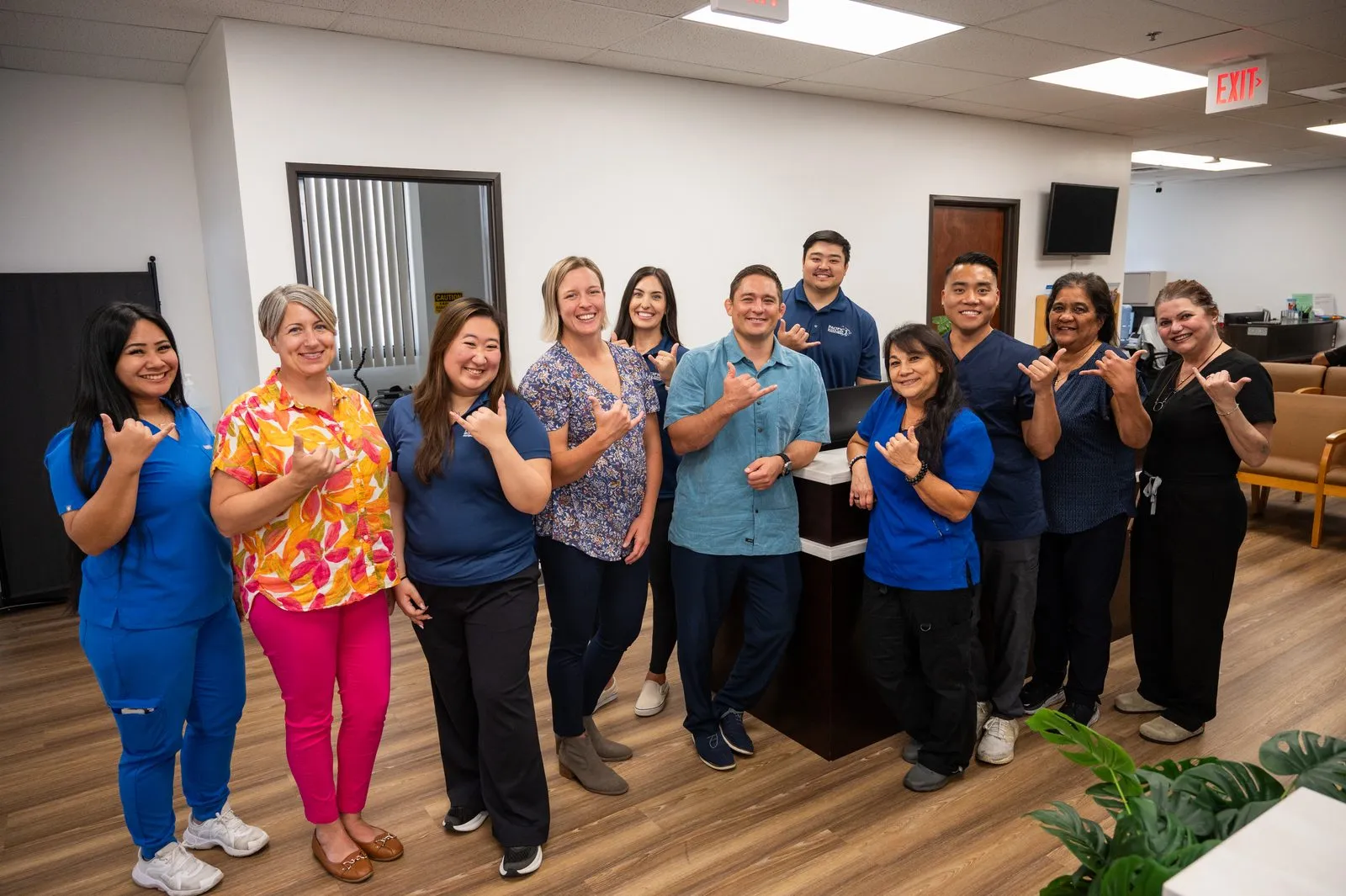
Rehabilitation & Recovery
Physical therapy for hip and knee replacement
PB&J Physical Therapy works inside our Honolulu and Waipahu/Kunia clinics, so your rehabilitation is planned with the same orthopedic team that treats you. Many orthopedic problems improve with therapy alone, and Hawai‘i allows direct access to physical therapy without a physician referral (some plans still require one for coverage).
PB&J Physical Therapy →Questions, Answered
Robotic joint replacement FAQ
Does the robot perform my surgery?+
No. Dr. Morton controls every step of your surgery. The robotic system is a surgical assistant that helps with 3D planning and provides real-time alignment data — it does not operate on its own.
Which robotic system will be used for my surgery?+
It depends on your procedure and where your surgery takes place. Dr. Morton is trained across multiple platforms: ROSA® for total knee replacement at The Queen's Medical Center, CORI® for knee replacement at Adventist Health Castle, and MAKO™ for CT-based hip and total or partial knee replacement at Hilo Community Surgery Center on the Big Island. Robotic hip replacement is currently performed only at Hilo Community Surgery Center. He'll recommend the system and venue that fit you.
Am I a candidate for robotic joint replacement?+
Candidacy depends on your diagnosis, joint damage, overall health, and whether non-surgical care has stopped helping. Not everyone is a candidate. The best way to find out is an evaluation with Dr. Morton.
What is the anterior (bikini) hip approach?+
It is a muscle-sparing approach to hip replacement that works between muscles rather than cutting through them, which may support earlier mobility for eligible patients. Recovery varies by individual.
Will I be able to go home the same day?+
Many healthy patients are candidates for same-day discharge, but not everyone qualifies. Eligibility depends on your health, your procedure, and your support at home.
How is robotic replacement different from conventional surgery?+
Compared with conventional technique, robotic assistance adds 3D planning from your anatomy and real-time data to help with implant alignment. Dr. Morton still performs the surgery; the robot assists.
Wondering if robotic joint replacement is right for you?
Start with a clear, honest evaluation. Dr. Morton and the Pacific Bone & Joint team will review every option — surgical and non-surgical — and help you decide.
For medical emergencies, call 911. This page is educational and is not a substitute for medical advice. Not everyone is a candidate; individual results and recovery vary.