
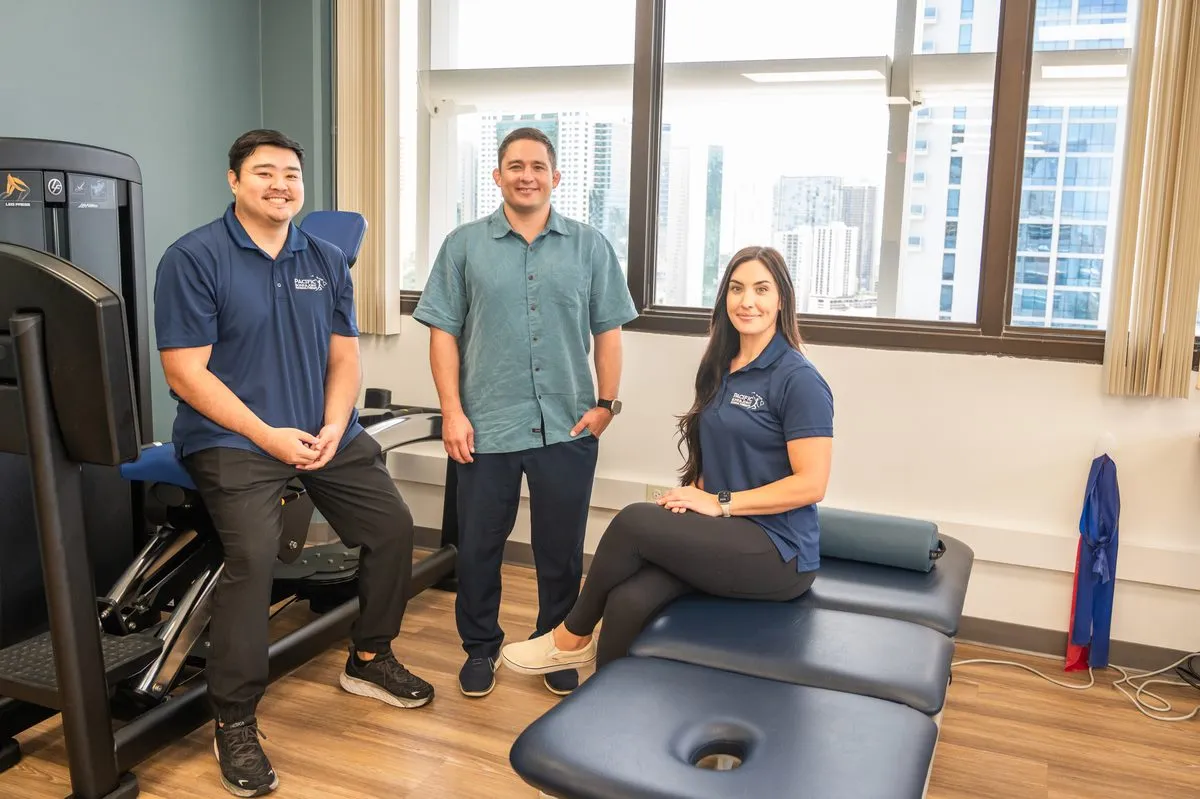

Musculoskeletal pain does not automatically mean you need surgery. Many patients with arthritis, tendon problems, sports injuries, meniscus tears, carpal tunnel syndrome, or trigger finger can improve with a stepwise plan that begins with an accurate diagnosis and the least invasive treatment likely to work.
That may include physical therapy, activity modification, bracing, medication, an injection, regenerative medicine such as platelet-rich plasma (PRP) or bone marrow aspirate concentrate (BMAC), or a small office-based procedure. Surgery remains an excellent option when it is truly needed, but it should be the right operation for the right diagnosis at the right time.
At Pacific Bone & Joint, our goal is not to avoid every operation. Our goal is to help patients avoid unnecessary surgery, preserve function when possible, and recommend surgery confidently when it offers the best path back to life.
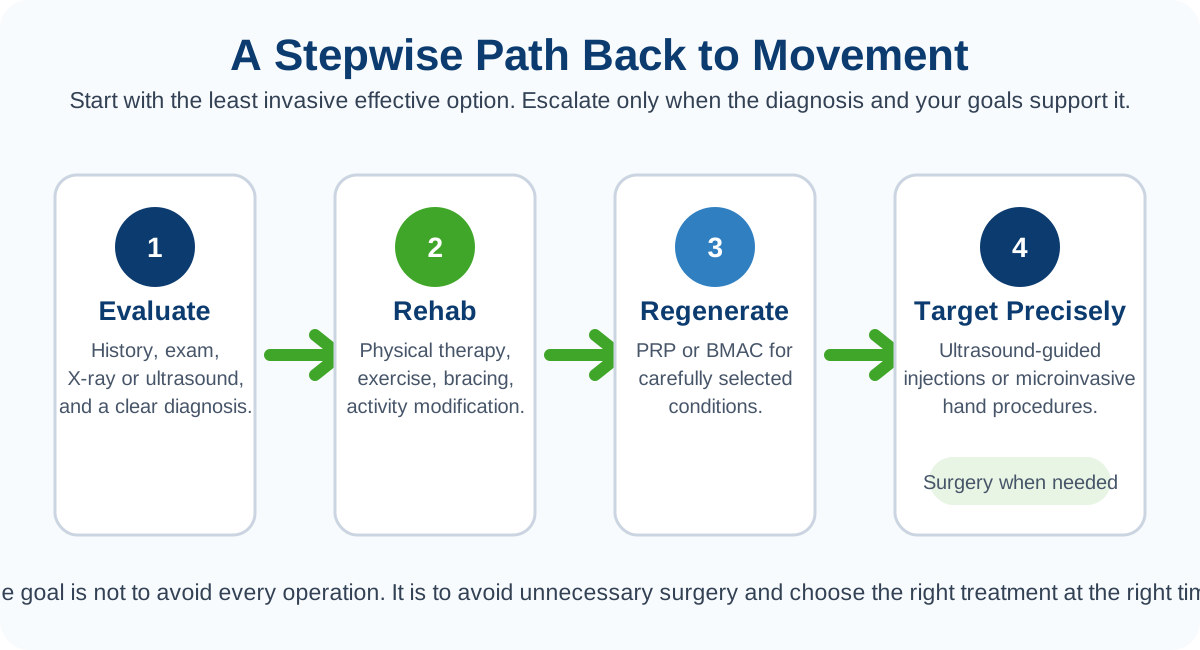
The Short Answer: Can Orthopedic Surgery Be Avoided?
Sometimes, yes.
A structured nonoperative plan can often reduce pain, improve strength, restore movement, and help patients return to work, exercise, sports, hiking, paddling, golf, or everyday activities. In other cases, conservative care helps for a period of time but surgery eventually becomes the most predictable solution.
The most important factor is the diagnosis.
A patient with age-related meniscus changes and no true locking may do very well with rehabilitation. A patient with a repairable meniscus root tear, a displaced tear causing mechanical locking, progressive nerve weakness, an unstable fracture, or advanced bone-on-bone arthritis may need a procedure sooner.
Key takeaways
- Physical therapy is often a first-line treatment, not an afterthought.
- PRP may improve pain and function in selected patients, particularly for knee osteoarthritis and some tendon disorders.
- BMAC may be considered in carefully selected joint-preservation cases, including certain bone marrow lesions, but it is not a guaranteed cartilage-regrowth treatment.
- Ultrasound guidance can make injections and selected hand procedures more precise and less invasive.
- Surgery should be considered when symptoms, function, examination findings, and imaging all point in the same direction.
Why Physical Therapy Is Often the Foundation
Physical therapy does more than provide a list of exercises. A well-designed program identifies the specific limitations contributing to pain and then builds capacity over time.
Treatment may include:
- Progressive strengthening
- Range-of-motion work
- Gait and movement retraining
- Balance and neuromuscular training
- Tendon loading
- Sport-specific or job-specific progression
- Bracing recommendations
- Education about flare-ups and activity modification
- A home program that can actually be maintained
The goal is not simply to make a painful area “looser.” The goal is to help the body tolerate the forces required for daily life and recreation.
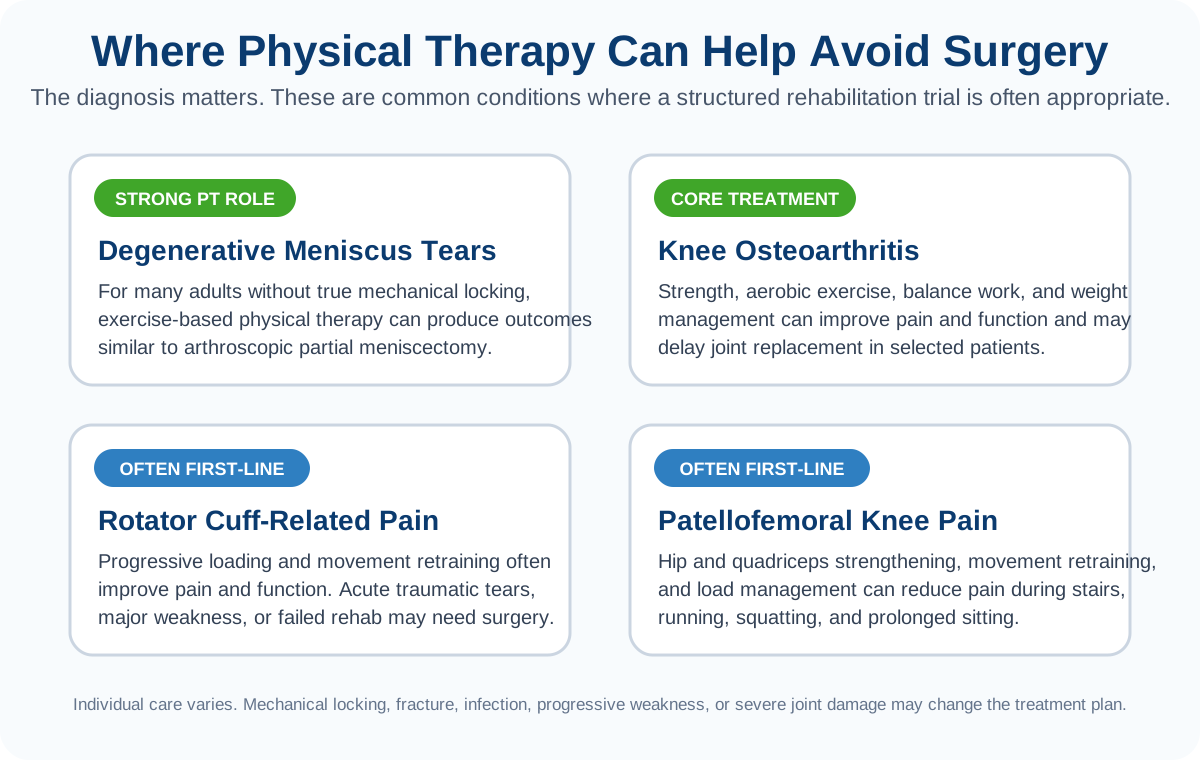
Conditions Where Physical Therapy May Help Avoid or Delay Surgery
Knee Osteoarthritis
Knee osteoarthritis can cause pain, stiffness, swelling, loss of strength, and difficulty with stairs, walking, or standing from a chair. An X-ray may show arthritis, but the X-ray alone does not determine whether surgery is necessary.
Physical therapy can help by improving:
- Quadriceps and hip strength
- Knee motion
- Walking tolerance
- Balance
- Confidence with activity
- Load distribution across the joint
Low-impact aerobic exercise such as cycling, swimming, water exercise, or walking can also improve overall conditioning. For some patients, weight management, bracing, medication, and injections are combined with therapy.
Physical therapy does not regrow missing cartilage. It can, however, improve how the entire limb functions. Some patients obtain enough relief to postpone joint replacement for years. Others use therapy as “prehabilitation,” entering surgery stronger and better prepared.
When arthritis becomes severe and pain continues despite a reasonable trial of nonsurgical care, robotic hip or knee replacement may provide the most reliable improvement.
Degenerative Meniscus Tears
Meniscus tears are common on MRI, especially as we age. Not every tear is the cause of pain, and not every tear needs arthroscopy.
In the ESCAPE randomized trial, 321 adults with degenerative meniscus tears were assigned to arthroscopic partial meniscectomy or exercise-based physical therapy. At five years, physical therapy remained noninferior to surgery for patient-reported knee function.[1]
That does not mean arthroscopy is never useful.
Arthroscopy may still be appropriate for:
- True mechanical locking
- A displaced tear
- Certain repairable tears
- Meniscus root tears in selected patients with mild arthritis
- Persistent mechanical symptoms after a reasonable nonsurgical trial
For the typical degenerative tear associated with established arthritis, however, removing part of the meniscus often does not address the main source of pain and may lead to a longer recovery than expected.
Rotator Cuff-Related Shoulder Pain
Many patients with shoulder pain have a combination of tendon irritation, weakness, stiffness, altered shoulder-blade mechanics, and age-related tendon changes.
Physical therapy may focus on:
- Rotator cuff strengthening
- Scapular control
- Shoulder mobility
- Gradual overhead loading
- Posture and work-position modifications
- Return-to-sport progression
A structured program can improve pain and function for many patients with tendinopathy, impingement-type symptoms, or degenerative tears.
Surgery may be more appropriate when there is an acute traumatic tear, substantial weakness, progression of a repairable tear, or persistent disability despite well-performed rehabilitation.
Patellofemoral Pain
Pain around or behind the kneecap is common in runners, hikers, athletes, and people who struggle with stairs or prolonged sitting.
Treatment often emphasizes:
- Hip and quadriceps strength
- Single-leg control
- Running or jumping mechanics
- Footwear and training-load review
- Gradual return to impact
- Temporary taping or bracing when appropriate
The treatment is rarely about one “weak muscle.” It is about coordinating the hip, knee, ankle, and training load.
Tendon Injuries
Tendons respond to appropriately dosed loading. Complete rest may calm symptoms temporarily, but prolonged unloading can reduce tendon capacity.
Physical therapy is commonly used for:
- Achilles tendinopathy
- Patellar tendinopathy
- Rotator cuff tendinopathy
- Gluteal tendinopathy
- Tennis elbow
- Hamstring injuries
When tendon pain persists despite a well-designed loading program, an ultrasound-guided procedure or PRP may be considered.
PRP: Using Your Own Platelets to Support Healing
Platelet-rich plasma is prepared from a sample of the patient’s own blood. The blood is processed to concentrate platelets and growth-factor-containing plasma, which is then injected into the target area.
PRP is not simply a “pain shot.” The proposed goal is to influence inflammation and the local healing environment.
Conditions where PRP may be considered
PRP is most commonly considered for selected patients with:
- Mild to moderate knee osteoarthritis
- Chronic tendon disorders
- Some ligament injuries
- Certain muscle injuries
- Persistent symptoms despite appropriate rehabilitation
What does the evidence show?
The PRP literature is not perfectly uniform. Preparation systems differ, platelet concentrations vary, leukocyte content varies, and treatment protocols are not standardized.
Several meta-analyses have found that PRP can improve pain and function in knee osteoarthritis compared with hyaluronic acid or other injections, particularly at intermediate follow-up.[2,3] A large placebo-controlled trial, however, did not find PRP superior to saline for pain or cartilage volume at 12 months.[4]
That mixed evidence does not mean PRP “never works.” It means patient selection, preparation, diagnosis, and expectations matter.
A practical way to view PRP is:
- It may reduce symptoms and improve function.
- Improvement is usually gradual rather than immediate.
- It works best as part of a complete plan that includes rehabilitation.
- It is not proven to regrow a normal joint surface.
- It should not be sold as a guaranteed way to prevent joint replacement.
At Pacific Bone & Joint, we are supportive of PRP when the diagnosis and evidence make sense. We also believe in being honest when PRP is unlikely to change the outcome.
BMAC: A More Advanced Orthobiologic Option
Bone marrow aspirate concentrate is prepared by obtaining a small amount of bone marrow, usually from the pelvis, and concentrating its cells and signaling proteins.
BMAC contains a mixture of:
- Platelets
- Growth factors
- Mononuclear cells
- A small population of connective-tissue progenitor cells
It is inaccurate to promise that BMAC will simply “grow new cartilage.” It is more accurate to describe it as an autologous orthobiologic that may influence inflammation, bone biology, and tissue healing in selected situations.
When BMAC may be considered
BMAC may be considered for carefully selected patients with:
- Knee osteoarthritis
- Bone marrow lesions beneath the cartilage
- Focal cartilage or bone problems
- Persistent symptoms after PRP
- A joint-preservation goal when immediate replacement is not yet necessary
The Hernigou research
Professor Philippe Hernigou and colleagues have published important work on bone marrow concentrate in orthopedics.
In a long-term study involving patients with bilateral knee osteoarthritis, one knee received subchondral bone marrow concentrate while the opposite knee underwent total knee arthroplasty. At approximately 15 years, many of the BMAC-treated knees had still avoided replacement, and the authors reported meaningful clinical improvement.[5,6]
This research is encouraging, especially because it evaluates treatment delivered into the subchondral bone rather than only into the joint.
Important limitations remain:
- These findings should be reproduced by independent research groups.
- BMAC preparations and cell counts vary.
- Not every patient has the same arthritis pattern.
- A successful joint-preservation result does not mean the arthritis was cured.
- BMAC is usually not covered by insurance.
We view BMAC as a promising option for the right patient, not as a universal replacement for knee replacement.
PRP vs. BMAC: What Is the Difference?
| Feature | PRP | BMAC |
|---|---|---|
| Source | Patient’s blood | Patient’s bone marrow |
| Typical role | Often the first orthobiologic considered | More advanced option for selected cases |
| Main components | Concentrated platelets and plasma proteins | Platelets, signaling proteins, marrow cells, and progenitor cells |
| Common uses | Knee arthritis and selected tendon disorders | Joint preservation, bone marrow lesions, selected cartilage or bone problems |
| Procedure | Blood draw, processing, targeted injection | Bone marrow aspiration, processing, targeted injection |
| Insurance | Usually not covered | Usually not covered |
| Important reality | May reduce symptoms but is not a cure | Promising but not a guaranteed cartilage-regrowth treatment |
The choice is not based on which treatment sounds more advanced. It is based on the diagnosis, severity, imaging findings, previous treatment, and the patient’s goals.
Ultrasound Guidance: Precision Without a Large Incision
Musculoskeletal ultrasound allows the clinician to see tendons, nerves, ligaments, fluid, and the tip of a needle in real time.
This may improve accuracy for:
- Joint injections
- Tendon-sheath injections
- PRP or BMAC placement
- Nerve hydrodissection
- Carpal tunnel evaluation
- Trigger finger evaluation
- Selected microinvasive procedures
Ultrasound does not replace good clinical judgment. It adds another layer of precision.
Carpal Tunnel Release With Ultrasound Guidance
Carpal tunnel syndrome occurs when the median nerve is compressed at the wrist. Symptoms may include numbness, tingling, night pain, weakness, dropping objects, or difficulty with fine motor tasks.
Milder cases may improve with:
- Neutral-position night splinting
- Activity modification
- Hand therapy
- A corticosteroid injection in selected patients
When symptoms persist, nerve testing shows significant compression, or weakness develops, release of the transverse carpal ligament may be recommended.
Carpal tunnel release with real-time ultrasound guidance allows the ligament to be released through a very small wrist incision while the nerve, tendons, blood vessels, and instrument are visualized continuously.
Potential benefits include:
- Local anesthesia
- Office-based treatment for eligible patients
- A small incision
- Immediate finger motion
- Faster return to activity for many patients
- Less disruption of the palm
In the randomized TUTOR trial, the median wrist incision was approximately 6 mm for ultrasound-guided release compared with a 22 mm palmar incision for mini-open release. Median return to work after ultrasound-guided release was approximately three to four days, although individual recovery varies.[7]
This is still surgery, but it is a microinvasive way to perform a complete carpal tunnel release.
Trigger Finger Release With Ultrasound Guidance
Trigger finger occurs when a flexor tendon catches beneath a thickened pulley near the base of the finger. Patients may notice clicking, painful catching, stiffness, or a finger that becomes locked.
Initial treatment may include:
- Activity modification
- Anti-inflammatory medication when appropriate
- Hand therapy
- A corticosteroid injection
When triggering persists or repeatedly returns, the A1 pulley can be released.
Trigger finger release with ultrasound guidance uses real-time imaging to identify the tendon, pulley, nearby nerves, and blood vessels. In selected patients, the release can be performed through a very small access point under local anesthesia.
The evidence base for ultrasound-guided trigger finger release is growing but is not as mature as the evidence for carpal tunnel release. Careful patient selection and specialized training are essential.
When Surgery Is Still the Best Treatment
Avoiding surgery should not become a goal that delays necessary care.
Surgery may be the most appropriate option for:
- Advanced hip or knee arthritis with major loss of function
- A displaced fracture
- An unstable injury
- A repairable acute tendon rupture
- A meniscus tear causing true mechanical locking
- A meniscus root tear in an appropriate candidate
- Progressive carpal tunnel weakness or severe nerve compression
- Infection
- A failed joint replacement
- Persistent pain and disability after appropriate nonsurgical treatment
Modern orthopedic surgery can be highly effective. The value of conservative care is not that it makes surgery “bad.” It helps ensure that patients who proceed with surgery are doing so for a clear reason and with realistic expectations.
A Practical Treatment Sequence
For many orthopedic conditions, a reasonable sequence looks like this:
- Confirm the diagnosis. Pain location alone is not enough.
- Identify red flags. Fracture, infection, instability, major weakness, or progressive nerve damage may require faster treatment.
- Build a rehabilitation plan. Improve strength, mobility, mechanics, and tolerance.
- Control the flare. Medication, bracing, ice, or an injection may help the patient participate in therapy.
- Consider orthobiologics. PRP or BMAC may be appropriate when evidence, anatomy, and goals align.
- Use a targeted procedure when needed. Ultrasound-guided treatment may address a specific pain generator with less disruption.
- Choose surgery when it offers the best outcome. Do not wait until life has become unnecessarily limited.
Orthopedic Care for Hawaiʻi’s Active Communities
Living in Hawaiʻi means staying active matters. Patients want to surf, hike, bike, paddle, golf, practice jiu-jitsu, work on their feet, care for family, and travel between islands.
A treatment plan should account for:
- Interisland travel
- Work and family responsibilities
- Access to physical therapy
- Home exercise options
- Return-to-ocean or return-to-sport goals
- The time and cost of prolonged recovery
Pacific Bone & Joint provides orthopedic surgery, sports medicine, physical therapy, regenerative medicine, fracture care, hand procedures, and joint replacement across Oʻahu and Hawaiʻi Island. Coordinating these services within one orthopedic team helps patients move from diagnosis to rehabilitation without losing the big picture.
Frequently Asked Questions
Can physical therapy really prevent surgery?
For some conditions, yes. Exercise-based therapy can produce outcomes similar to surgery for many degenerative meniscus tears and can substantially improve pain and function in knee osteoarthritis, patellofemoral pain, and many tendon disorders. Other conditions still require surgery.
How long should I try physical therapy before considering surgery?
There is no single timeline. Many patients need six to twelve weeks of consistent, progressive treatment, but the diagnosis matters. Severe weakness, true locking, an unstable injury, or progressive nerve damage may justify earlier intervention.
Does PRP regrow cartilage?
PRP may reduce inflammation and improve symptoms, but it has not been proven to reliably restore a normal cartilage surface. Claims of guaranteed cartilage regrowth should be viewed cautiously.
Is BMAC the same as a stem cell injection?
BMAC contains a mixed population of marrow-derived cells, including a small number of progenitor cells, plus platelets and signaling proteins. It should not be marketed as a guaranteed “stem cell cure.”
Is PRP better than a cortisone injection?
Cortisone often works faster and may be helpful for a painful inflammatory flare. PRP usually works more gradually and may provide longer symptom improvement in selected conditions. The better choice depends on the diagnosis, timing, medical history, and goals.
Is carpal tunnel release with ultrasound guidance actually surgery?
Yes. It is a complete release of the transverse carpal ligament, performed through a small incision with continuous ultrasound visualization. “Minimally invasive” does not mean incomplete.
Can trigger finger be treated without surgery?
Often, yes. Many patients improve with activity modification or a corticosteroid injection. Persistent, recurrent, or locked trigger fingers may benefit from release.
When should I stop trying to avoid surgery?
When pain and disability remain unacceptable despite appropriate care, or when waiting risks permanent weakness, deformity, instability, or further damage, surgery may be the best next step.
The Bottom Line
The best orthopedic care is not automatically surgical or nonsurgical. It is diagnosis-driven and patient-centered.
Physical therapy can help many patients recover without surgery. PRP and BMAC offer additional options for selected patients. Ultrasound guidance allows precise injections and microinvasive hand procedures. Joint replacement, fracture fixation, tendon repair, and other operations remain essential when they provide the most predictable path forward.
The goal is simple: help you move better, recover well, and return to the activities that make life in Hawaiʻi worth living.
Pacific Bone & Joint can help you decide which step is appropriate for your diagnosis.
References
- Noorduyn JCA, et al. Effect of Physical Therapy vs Arthroscopic Partial Meniscectomy in People With Degenerative Meniscal Tears: Five-Year Follow-up of the ESCAPE Randomized Clinical Trial. JAMA Network Open. 2022;5(7):e2220394.
- Belk JW, et al. Platelet-Rich Plasma Versus Hyaluronic Acid for Knee Osteoarthritis: A Systematic Review and Meta-analysis of Randomized Controlled Trials. American Journal of Sports Medicine. 2021;49(1):249-260.
- Filardo G, et al. PRP Injections for the Treatment of Knee Osteoarthritis: A Meta-Analysis of Randomized Controlled Trials. Cartilage. 2021;13(1_suppl):364S-375S.
- Bennell KL, et al. Effect of Intra-articular Platelet-Rich Plasma vs Placebo Injection on Pain and Medial Tibial Cartilage Volume in Patients With Knee Osteoarthritis: The RESTORE Randomized Clinical Trial. JAMA. 2021;326(20):2021-2030.
- Hernigou P, et al. Long-term comparison of subchondral bone marrow concentrate and contralateral total knee arthroplasty for bilateral knee osteoarthritis. International Orthopaedics. 2021;45:365-373.
- Hernigou P, et al. Related long-term analysis of subchondral bone marrow concentrate for knee osteoarthritis. International Orthopaedics. 2021;45:391-399.
- Eberlin KR, et al. Multicenter randomized trial of carpal tunnel release with ultrasound guidance versus mini-open release (TUTOR). Expert Review of Medical Devices. 2023.
