
How It Works
Your own blood, processed for a specific target
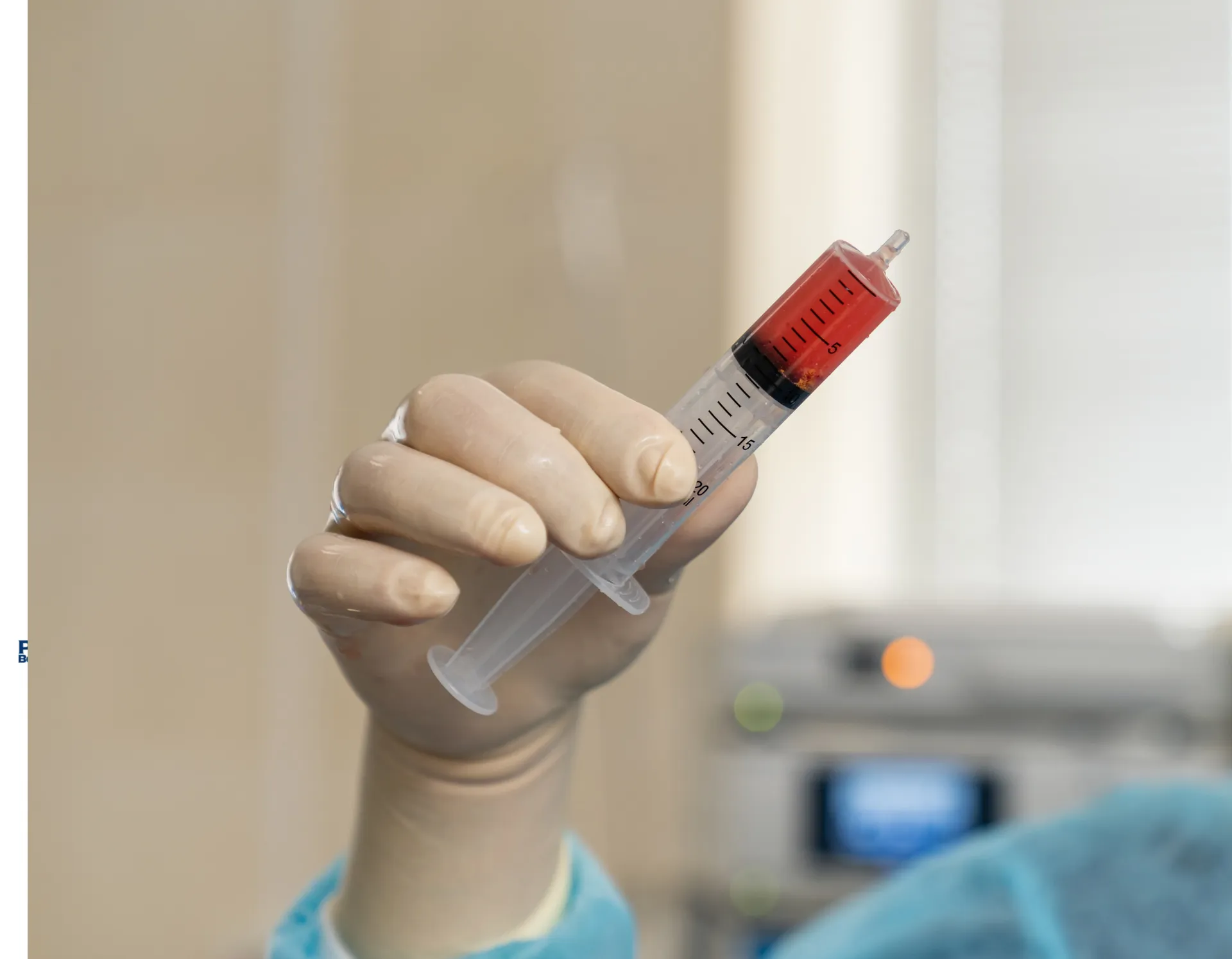
Blood draw
Blood is drawn from your arm. The starting volume and your baseline platelet count influence the final product.
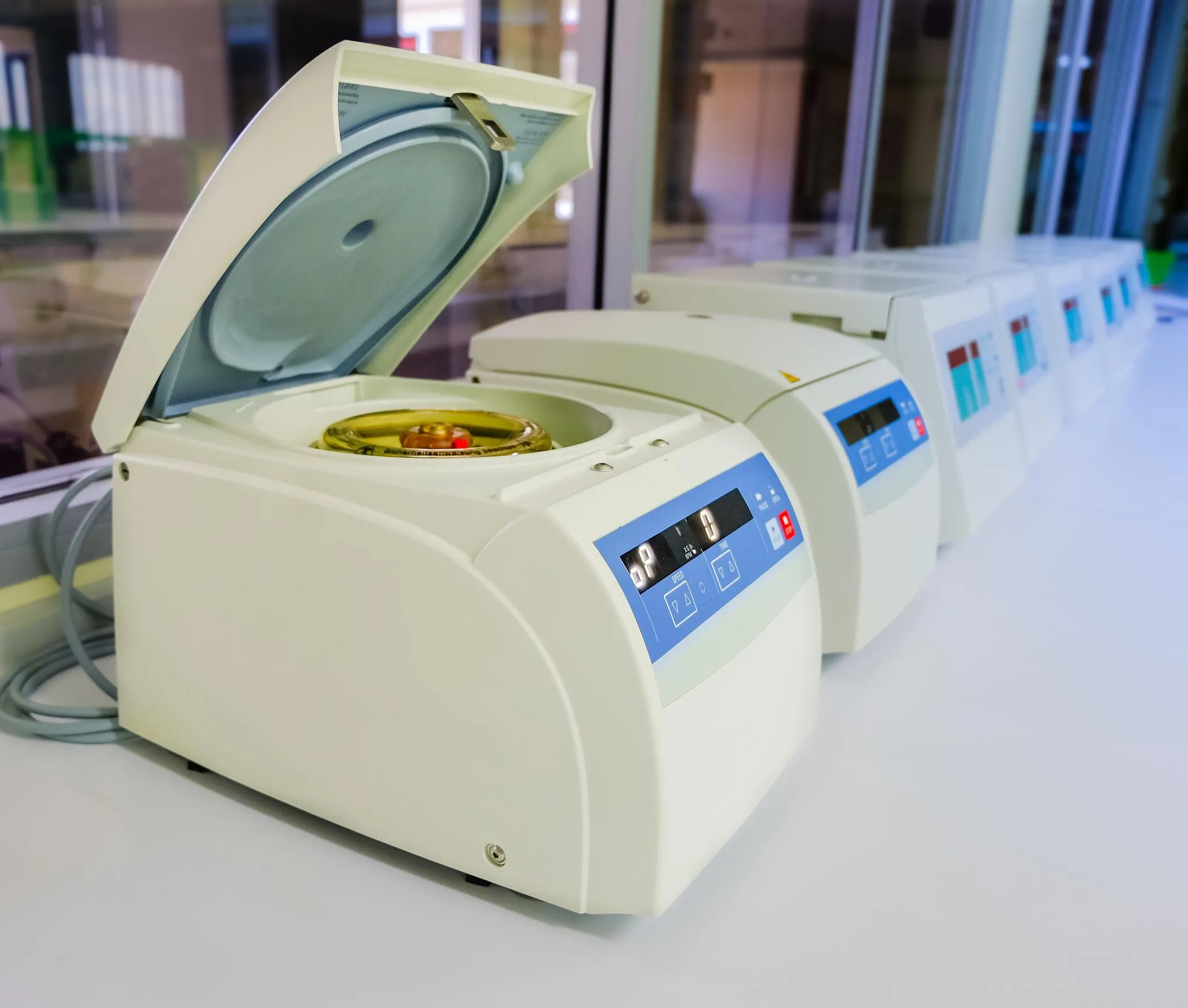
Separate & concentrate
Centrifugation separates blood components and creates a platelet-rich fraction. Different systems can produce very different platelet and white-cell concentrations.
Image-guided placement
The prepared PRP is placed at the intended joint or soft-tissue target with ultrasound guidance when appropriate.
Why Formulation Matters
“PRP” is a category, not a single drug
Two syringes can both be labeled PRP while containing very different total platelet doses and white-cell profiles. That variability is one reason clinical studies do not all produce the same result.
Total platelet dose
The number of platelets delivered may matter more than simply the concentration multiple or syringe volume. Recent knee-OA reviews show a dose-response signal.
Leukocyte profile
Leukocyte-poor and leukocyte-rich PRP are biologically different. The preferred formulation depends on the joint, tendon and clinical goal.
Target & diagnosis
A knee joint with osteoarthritis, an irritated tendon and an injured ligament are not the same biologic problem and should not automatically receive the same protocol.
Accurate placement
Ultrasound guidance allows real-time targeting rather than relying on surface landmarks alone, especially around tendons and smaller structures.
An honest note: PRP is not a miracle injection. It can improve pain and function in selected musculoskeletal conditions, but outcomes vary by diagnosis and preparation. It does not reverse advanced mechanical deformity, reliably regrow an arthritic joint surface, or replace surgery when surgery is the more predictable option.
Research & Evidence
Why PRP studies can disagree
Preparation is heterogeneous
Clinical trials use different kits, blood-draw volumes, platelet doses, leukocyte profiles and injection schedules. Pooling them under one label can hide meaningful differences.
Dose matters in knee OA
A 2024 systematic review found a possible dose-response relationship in knee osteoarthritis and identified better outcomes when total platelet dose exceeded roughly 10 billion. A separate meta-analysis found high-platelet preparations produced more durable benefit than low-platelet preparations.
Not every trial is positive
Some high-quality trials, including RESTORE, found no superiority over placebo. That is why we discuss PRP by diagnosis and formulation rather than claiming that all PRP works for everyone.
Selected references: Berrigan WA, et al. Curr Rev Musculoskelet Med. 2024;17:482–497 (platelet-dose systematic review); Bansal H, et al. Am J Sports Med. 2025 (meta-analysis of randomized trials by platelet concentration); Bennell KL, et al. JAMA. 2021;326:2021–2030 (RESTORE trial). Evidence and optimal formulations continue to evolve.
PRP: What Matters More Than the Label
A useful PRP discussion should include the actual biologic formulation, not only the fact that a syringe contains plasma and platelets.
Explore Related Care
Related care
BMAC
A marrow-derived orthobiologic for carefully selected cases.
Explore →Regenerative Medicine
How PRP, BMAC, laser and joint-preservation options fit together.
Explore →Sports Medicine
Tendon, ligament, meniscus and sports-injury care.
Explore →Physical Therapy
Progressive loading and rehab to support recovery.
Explore →2-Minute Check
Am I a candidate for PRP treatment?
Answer a few quick questions. This is educational and is not a diagnosis — only an evaluation can tell for sure.
Do you have early arthritis or a tendon injury?
Would you like to explore non-surgical options before considering surgery?
Have you either not yet tried, or not responded to, other conservative care?
You may be a strong candidate.
Your answers suggest PRP treatment could be a good fit. The next step is a simple evaluation, where we'll confirm with an exam and imaging and review every option with you — surgical and non-surgical.
This tool is educational and not a diagnosis. Not everyone is a candidate; only a clinical evaluation can determine what's right for you.
You might be a candidate — let's talk.
Some of your answers point toward PRP treatment, but the right path depends on the details. A short evaluation will give you a clear, honest answer and a plan.
This tool is educational and not a diagnosis. Not everyone is a candidate; only a clinical evaluation can determine what's right for you.
Let's take a closer look.
Your answers don't point clearly to PRP treatment yet — but that doesn't mean we can't help. We'll evaluate what's going on and point you to the care that fits, often starting with non-surgical options.
This tool is educational and not a diagnosis. Not everyone is a candidate; only a clinical evaluation can determine what's right for you.
Answer all 3 questions to see your result.
Patient Reviews
What patients say
4.9 average across 509 ratings on 8 review sites
“Pacific Bone and Joint, located in the Ala Moana Medical Building, has an absolutely amazing staff of medical professionals. Cindy is so helpful and knowledgeable in preparing you for procedures. I received a gel injection treatment and the entire staff was so friendly and professional.”
— Gareth Y.· Google review
Review excerpts reflect individual patient experiences and may be lightly condensed. Results vary.
Rehabilitation & Recovery
Physical therapy for PRP treatment
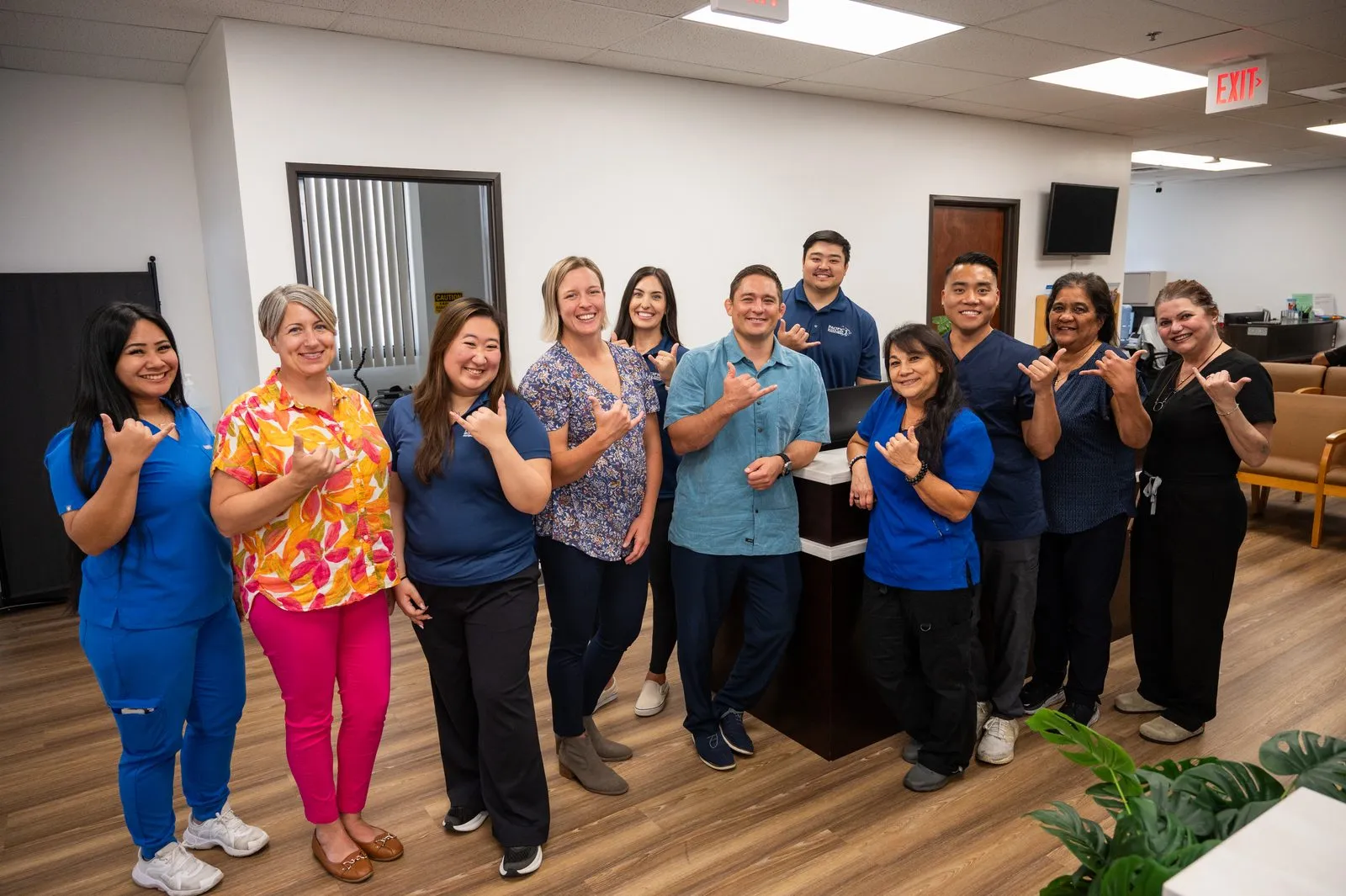
PB&J Physical Therapy works inside our Honolulu and Waipahu/Kunia clinics, so your rehabilitation is planned with the same orthopedic team that treats you. Many orthopedic problems improve with therapy alone, and Hawai‘i allows direct access to physical therapy without a physician referral (some plans still require one for coverage).
PB&J Physical Therapy →Questions, Answered
Frequently asked questions
What is PRP?+
Platelet-rich plasma is prepared from your own blood. A centrifuge separates and concentrates platelets into a smaller volume that is then delivered to the treatment target. Platelets release signaling proteins and growth factors involved in inflammation and tissue repair.
Is all PRP the same?+
No. PRP is a category, not one standardized product. The total platelet dose, platelet concentration, leukocyte content, final volume, preparation system and the patient’s baseline blood count can all change what ends up in the syringe. The diagnosis and accuracy of injection placement matter too.
Does the number of platelets matter?+
For knee osteoarthritis, recent systematic reviews suggest a dose-response relationship, with higher platelet doses associated with better outcomes in several studies. One 2024 review identified a signal above roughly 10 billion platelets for knee OA, but that threshold should not be assumed to apply to every tendon, joint or diagnosis.
What is leukocyte-poor versus leukocyte-rich PRP?+
Some PRP preparations contain relatively few white blood cells and others contain more. The preferred formulation may depend on the tissue being treated. For example, leukocyte-poor PRP is commonly studied for intra-articular knee osteoarthritis, while the ideal formulation for tendon disorders is less settled.
Does PRP cure arthritis or regrow cartilage?+
No. PRP may reduce pain and improve function in selected patients, but it should not be marketed as a cure or as a proven way to regrow an arthritic joint surface.
Is PRP covered by insurance?+
Usually not. We'll explain the cost clearly before any treatment.
How many injections will I need?+
It depends on the diagnosis, formulation, dose and response. Some protocols use a single injection while others use a short series. We individualize the plan rather than assuming every PRP treatment should be identical.
Why use ultrasound guidance?+
Live ultrasound lets the clinician identify the target and watch the needle reach it in real time. This is particularly useful around tendons, small joints and other structures where millimeters matter.
Wondering whether PRP fits your diagnosis?
We evaluate the tissue problem, imaging, treatment history and whether an orthobiologic is likely to add value — not simply whether an injection can be offered.