
Understanding Bone & Joint Infections
Four types, one priority: fast diagnosis and treatment
Bone (osteomyelitis) and joint (septic arthritis) infections have different origins and may need different treatments — but all share one thing: time matters. Delays lead to bone destruction, permanent joint damage, and systemic illness.
Acute bone infection (osteomyelitis)
A sudden infection in bone, often from bacteria entering through a wound, fracture, or bloodstream. Can progress quickly and requires urgent evaluation and treatment.
Septic arthritis
Bacterial infection inside a joint space. Causes severe pain, swelling, and fever. Joint fluid must be tested (aspirated) and the joint drained — it's a surgical emergency.
Prosthetic joint infection
An infection around a joint implant, either early (within weeks of surgery) or late (months or years after). Some can be treated with antibiotics alone; others need implant revision surgery.
Chronic osteomyelitis
A long-standing bone infection, often from an old fracture or prior surgery. May have breaks in symptoms — but the infection isn't gone. Requires careful diagnosis and often surgical debridement.
Treatment Approach
Diagnosis, surgery, and antibiotics — working together
Recognize the signs
Fever with bone or joint pain, especially near a wound or after surgery, is a red flag. Call immediately — infections in bone and joint can move quickly.
Diagnose carefully
Imaging (X-ray, CT, MRI), blood cultures, and joint/bone aspiration under imaging guidance confirm the diagnosis and identify the organism so treatment is targeted.
Coordinate care
We work closely with infectious disease — antibiotics are started early and adjusted based on culture results. Surgery (drainage, debridement, or implant revision) is coordinated with medical treatment.
Partnership in Care
We work hand-in-hand with infectious disease
The best outcomes come when surgery and medical treatment (antibiotics) are coordinated from the start. Blood cultures guide the choice of antibiotics; imaging and aspirates confirm the diagnosis; and surgery removes infected bone and drained material while antibiotics circulate. We communicate closely with your infectious disease physician throughout — before, during, and after any procedure.
When Infection Strikes
Other services that support recovery
Fracture Care
Treatment of new fractures — preventing infection starts with good initial care.
Learn more →Joint Replacement
Modern surgical and infection-prevention protocols minimize prosthetic joint infection risk.
Learn more →Wiki Wiki Urgent Ortho
Same-day evaluation for new bone or joint pain — including possible infection.
Learn more →Bone & Joint Infections: Treatment & Outcomes
Key metrics for early diagnosis, treatment, and infection prevention.
Patient Reviews
What patients say
4.9 average across 509 ratings on 8 review sites
“Pacific Bone and Joint, located in the Ala Moana Medical Building, has an absolutely amazing staff of medical professionals. Cindy is so helpful and knowledgeable in preparing you for procedures. I received a gel injection treatment and the entire staff was so friendly and professional.”
— Gareth Y.· Google review
Review excerpts reflect individual patient experiences and may be lightly condensed. Results vary.
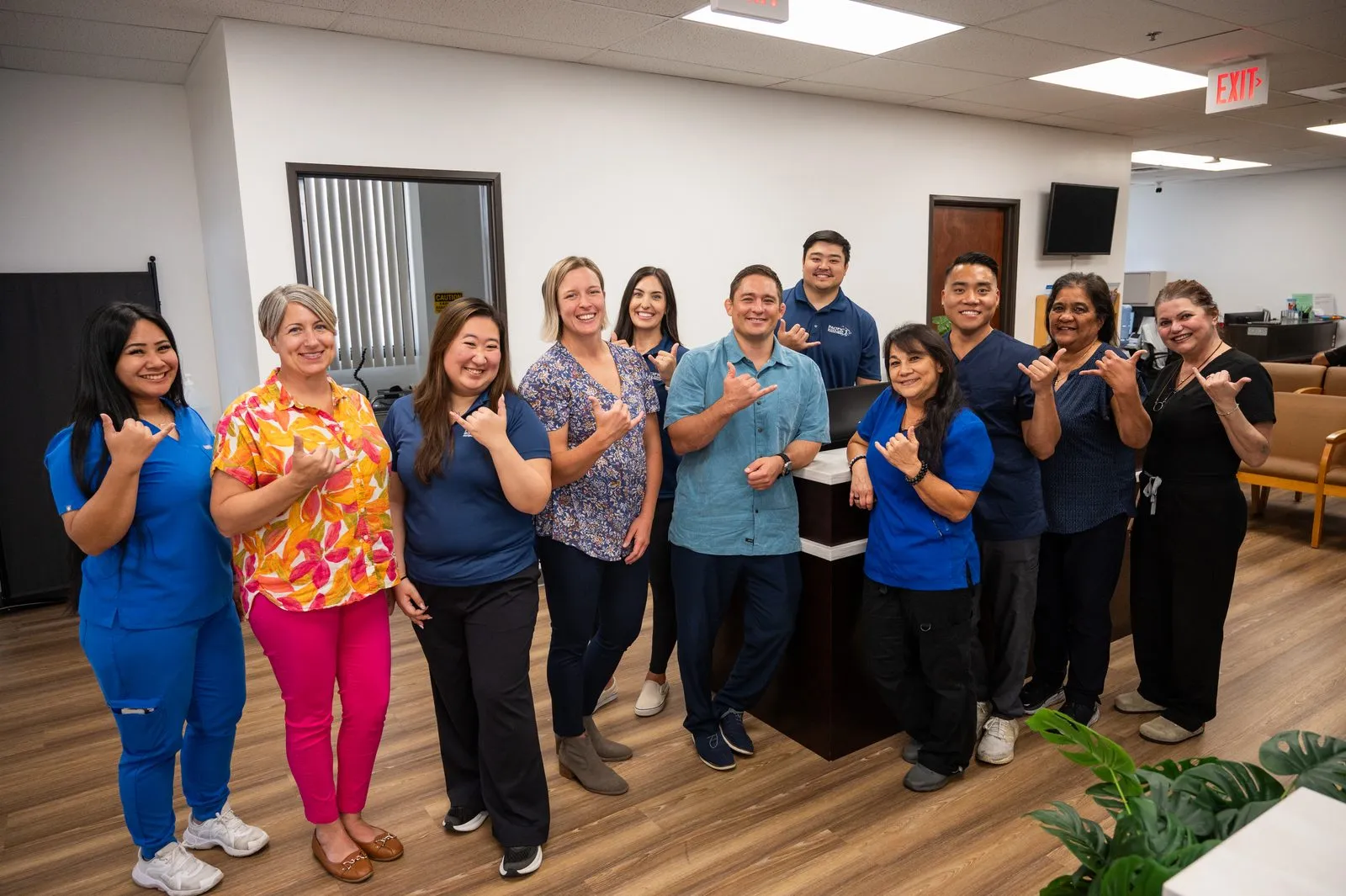
Rehabilitation & Recovery
Physical therapy for bone and joint infection treatment
PB&J Physical Therapy works inside our Honolulu and Waipahu/Kunia clinics, so your rehabilitation is planned with the same orthopedic team that treats you. Many orthopedic problems improve with therapy alone, and Hawai‘i allows direct access to physical therapy without a physician referral (some plans still require one for coverage).
PB&J Physical Therapy →FAQ
Common questions about bone and joint infections
How do I know if a bone or joint is infected?+
The classic signs are fever, severe pain, swelling, and redness over bone or joint — especially after surgery, injury, or if you have a wound. Chills and feeling ill are other clues. Trust your instincts: if something doesn't feel right after surgery or with a fracture, call immediately.
Is an infected joint or bone a surgical emergency?+
Septic arthritis (infection inside the joint) is a surgical emergency. It needs imaging and fluid testing (aspiration) right away, followed by urgent surgical drainage. Osteomyelitis (bone infection) also needs prompt evaluation, though the urgency depends on how acute it is and how sick you are.
What causes bone and joint infections?+
After surgery, bacteria can seed the implant or wound. With an open fracture, bacteria enter directly. Sometimes infection travels through the bloodstream from a wound or infection elsewhere. Poor blood supply, diabetes, and weakened immunity all raise risk.
If I have a prosthetic joint infection, do I need another surgery?+
Not always. Early infections (within weeks of surgery) sometimes respond to surgical drainage, antibiotics, and keeping the implant. Later infections usually need the implant removed, a period of antibiotics, and then reimplantation. Your infectious disease doctor and surgeon work together on the plan.
How long does antibiotic treatment last?+
It depends. A simple soft-tissue infection may need 2 weeks of antibiotics. An osteomyelitis or joint infection typically needs 4–6 weeks or longer. Prosthetic joint infections can require antibiotics for months. We coordinate with infectious disease to get the timing right.
Can I prevent bone and joint infections?+
Good surgical technique, sterile technique, and modern prophylactic antibiotics before surgery cut infection risk sharply. After surgery, keep wounds clean and dry, watch for signs of infection, and call immediately if you see redness, drainage, or fever. For fractures, reducing contamination and getting prompt surgical fixation when appropriate also helps.
Don't ignore signs of bone or joint infection
Fever with bone or joint pain is a red flag. Early diagnosis and treatment prevent lasting damage. Call for an urgent evaluation.