
Honolulu · Oahu
Robotic Knee Replacement in Honolulu
Serving Honolulu and urban Oahu. When knee arthritis no longer responds to non-surgical care, robotic-assisted knee replacement can relieve pain and restore function — with 3D planning tailored to your anatomy and muscle-sparing, often cementless technique.
Ala Moana Medical Building, 1441 Kapi‘olani Blvd., Suite 2020
- Robotic 3D planning for precise alignment
- Muscle-sparing, tourniquet-less options
- Cementless fixation for durable, biologic bonding
- Same-day discharge for eligible patients
 Written and medically reviewed by Paul Norio Morton, MD, FAAOS, FAAHKS · Board-certified orthopedic surgeon · Last reviewed July 2026
How It Works
How robotic-assisted knee replacement works
The robot is a tool that helps Dr. Morton plan and execute your procedure precisely. It assists the surgeon — it does not perform surgery on its own.
3D plan from your scan
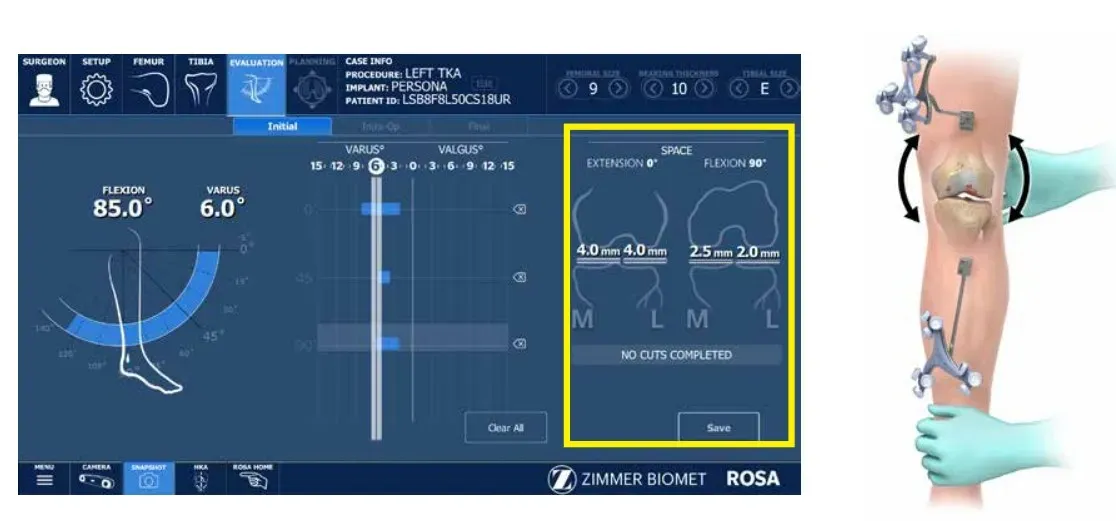
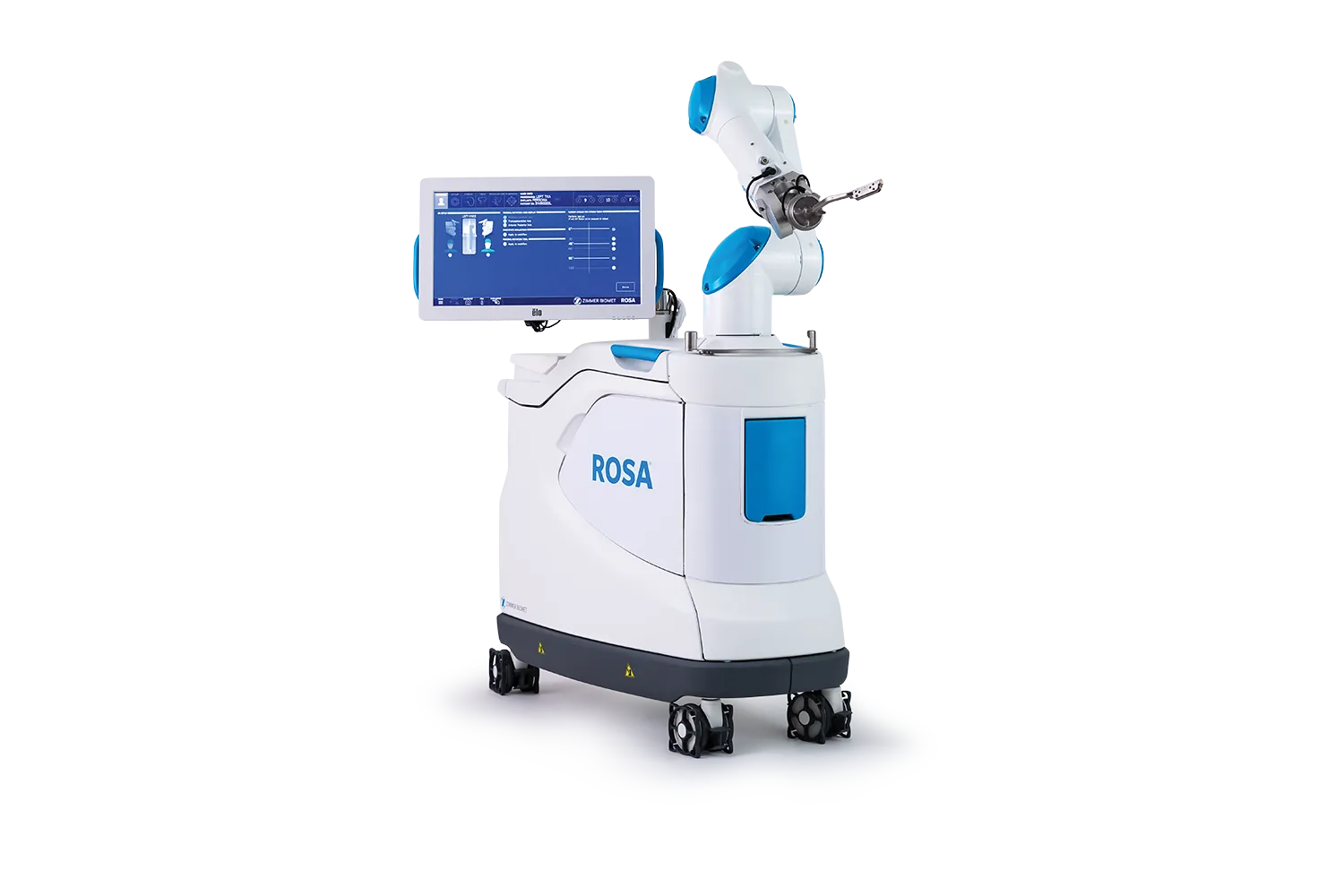
A pre-operative scan builds a 3D model of your knee, so your implant plan is personalized to your anatomy with the ROSA® or CORI® system.
Surgeon-controlled precision
Dr. Morton uses real-time data to position the implant accurately. Robotic assistance is designed to help place components within the plan.
Muscle-sparing technique
Where appropriate, a subvastus, muscle-sparing approach works around the muscle — designed to support a more comfortable early recovery. Recovery varies.
Guided recovery
You start moving soon after surgery with a plan from our in-house PB&J Physical Therapy team — right here on Oahu.
Where Your Care Happens
Local clinic, expert surgery
Robotic total knee replacement is performed at The Queen's Medical Center with the ROSA® system, or at Adventist Health Castle with the CORI® system.
Robotic total knee
Robotic knee
Is It Right For You?
Who is a candidate for knee replacement
Knee replacement is usually considered for advanced arthritis when non-surgical care — activity changes, therapy, medication, and injections — no longer gives lasting relief. The American Academy of Orthopaedic Surgeons notes that the decision is based on your pain and loss of function, not your age.
Because we offer both surgical and non-surgical care, Dr. Morton will review every option honestly and recommend surgery only when it is the right fit. Not everyone is a candidate.
You may be a candidate if
- Knee pain limits walking, stairs, or sleep
- Non-surgical care no longer gives lasting relief
- X-rays show arthritis or joint damage
- You're ready to talk through your options with a surgeon
What To Expect
From evaluation to recovery
Timelines are general and vary by patient.
Before surgery
An evaluation and X-rays confirm the diagnosis. If you proceed, a pre-operative CT builds your 3D plan, and we coordinate medical clearance and prehab exercises to prepare.
Day of surgery
Your procedure takes place at The Queen's Medical Center or Adventist Health Castle, with the full resources of a hospital on hand.
Recovery
You begin moving soon after surgery with guidance from our in-house PB&J Physical Therapy team, coordinating your rehab right here on Oahu.
Knee Replacement by the Numbers
What registry data and peer-reviewed research show about modern robotic-assisted knee replacement.
Hospital-Based Robotic Surgery
Robotic precision with full hospital resources
In urban Honolulu, your surgery is performed in an accredited hospital — the right setting when you want advanced monitoring and support close at hand.
Two robotic platforms
ROSA® at The Queen's Medical Center and CORI® at Adventist Health Castle — matched to your procedure.
Full hospital support
On-site medical and anesthesia teams — reassuring for patients who want that added layer of care.
Surgeon-led
Dr. Morton directs the plan, the technology, and your care from evaluation through recovery.
Central & convenient
Our Ala Moana clinic keeps consults, imaging, and follow-up easy to reach in town.
2-Minute Check
Am I a candidate for robotic knee replacement?
Answer a few quick questions. This is educational and is not a diagnosis — only an evaluation can tell for sure.
Do you have hip or knee pain that limits walking, stairs, or sleep?
Have non-surgical treatments (therapy, injections, medication) stopped giving lasting relief?
Have X-rays shown arthritis or joint damage, or has a provider mentioned it?
You may be a strong candidate.
Your answers suggest robotic knee replacement could be a good fit. The next step is a simple evaluation, where we'll confirm with an exam and imaging and review every option with you — surgical and non-surgical.
This tool is educational and not a diagnosis. Not everyone is a candidate; only a clinical evaluation can determine what's right for you.
You might be a candidate — let's talk.
Some of your answers point toward robotic knee replacement, but the right path depends on the details. A short evaluation will give you a clear, honest answer and a plan.
This tool is educational and not a diagnosis. Not everyone is a candidate; only a clinical evaluation can determine what's right for you.
Let's take a closer look.
Your answers don't point clearly to robotic knee replacement yet — but that doesn't mean we can't help. We'll evaluate what's going on and point you to the care that fits, often starting with non-surgical options.
This tool is educational and not a diagnosis. Not everyone is a candidate; only a clinical evaluation can determine what's right for you.
Answer all 3 questions to see your result.
Rehabilitation & Recovery
Physical therapy for knee replacement
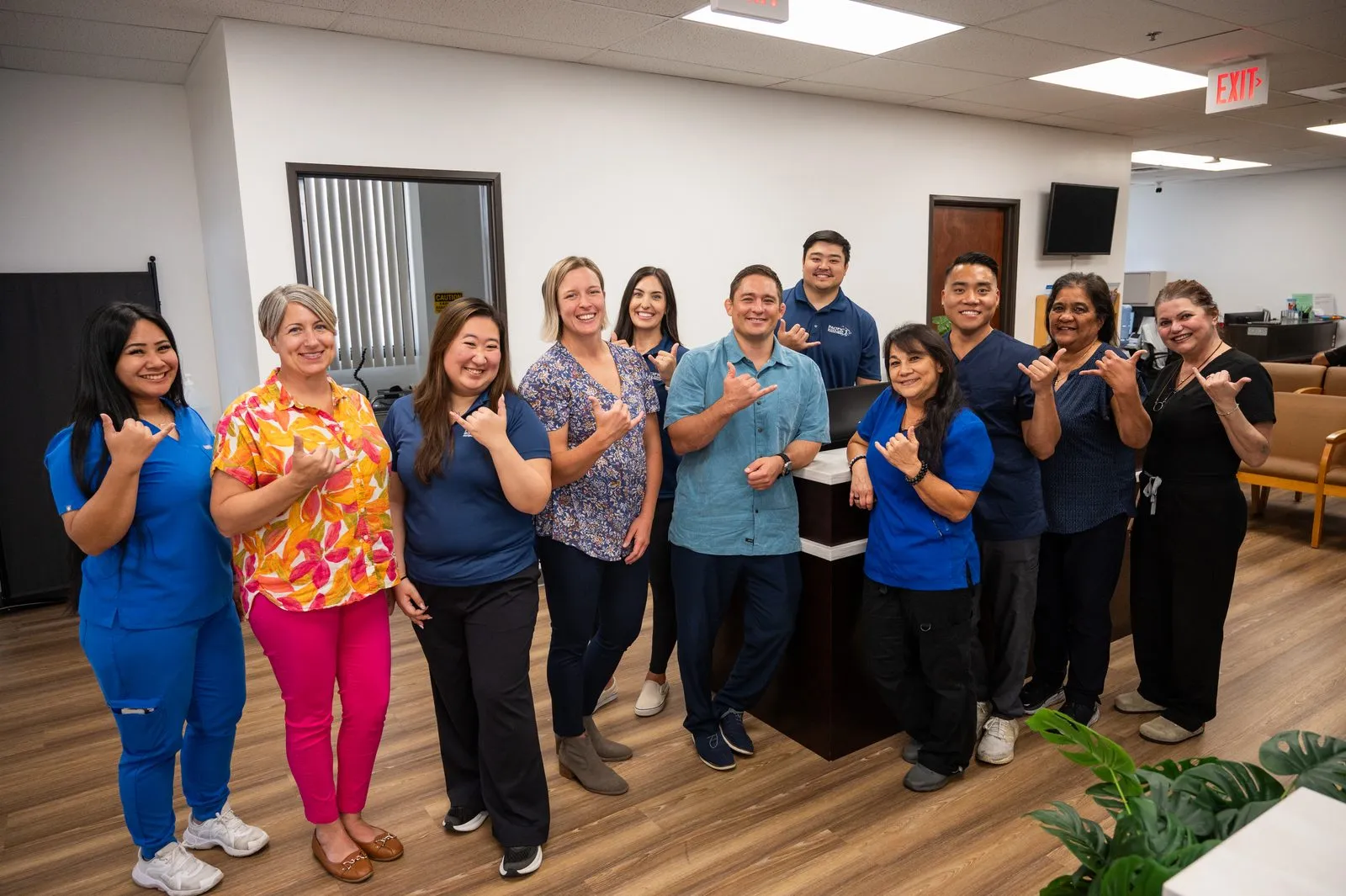
PB&J Physical Therapy works inside our Honolulu and Waipahu/Kunia clinics, so your rehabilitation is planned with the same orthopedic team that treats you. Many orthopedic problems improve with therapy alone, and Hawai‘i allows direct access to physical therapy without a physician referral (some plans still require one for coverage).
PB&J Physical Therapy →Patient Reviews
What patients say
4.9 average across 509 ratings on 8 review sites
“Dr. Morton and his staff have been awesome. The robotic knee surgery went perfectly. His support staff Kelcie is kind and efficient, and the PTs Chelsea and Bryson have been the most beneficial to recovery!”
— Annie U.· Google review
“Since I live on Maui, I started my search for an orthopedic surgeon and found that robotics was an important factor to consider. I first had a total knee replacement on my left knee and it went so well, I had my right knee done seven months later. I am back to doing all the activities that I hobbled through for so many years.”
— Dean P.· Google review
Review excerpts reflect individual patient experiences and may be lightly condensed. Results vary.
Common Questions
Robotic knee replacement in Honolulu: your questions answered
Where is robotic knee replacement performed for Honolulu patients?+
Robotic knee replacement for Honolulu patients is performed at The Queen's Medical Center with the ROSA® system or Adventist Health Castle with the CORI® system. Consults, imaging, and follow-up visits happen at our Ala Moana clinic in Honolulu.
Does the robot perform my knee surgery?+
No. Dr. Morton controls every step of your knee replacement. The robotic system is a surgical assistant that builds a 3D plan from your imaging and provides real-time alignment and soft-tissue balance data so the implant is positioned according to the plan — it does not operate on its own.
Am I a candidate for robotic knee replacement?+
Candidacy depends on your diagnosis, the degree of arthritis or joint damage, your overall health, and whether non-surgical care — activity changes, therapy, medication, and injections — has stopped giving lasting relief. The American Academy of Orthopaedic Surgeons notes that the decision is based on pain and loss of function, not age. Not everyone is a candidate.
Will I go home the same day, and who handles my rehab in Honolulu?+
Selected patients go home the day of surgery; others stay one night in the hospital. Eligibility depends on your health, procedure, and support at home. Your rehabilitation on Oahu runs with our in-house PB&J Physical Therapy team, working from the same recovery protocol as your surgeon.
Evidence & Research
What the evidence says about robotic-assisted knee replacement
Robotic assistance is a tool that helps the surgeon plan and position your implant. Here is a plain-language summary of what peer-reviewed research and the American Academy of Orthopaedic Surgeons report — with the honest limits.
Robotic assistance is designed to place the implant more precisely. In a 2022 systematic review and meta-analysis, robotic-arm–assisted knee replacement was associated with more accurate component positioning and fewer alignment outliers than conventional, manual technique.1
In a controlled study, robotic-arm assistance was associated with less early post-operative pain and improved early functional recovery compared with conventional jig-based technique — though recovery varies for every patient.2
Larger reviews are more measured: robotic assistance consistently improves alignment accuracy, but whether that translates into better long-term pain relief, function, and implant durability than conventional technique is still being studied.3
Knee replacement itself is well established. The American Academy of Orthopaedic Surgeons reports that more than 90% of modern total knee replacements are still functioning well 15 years after surgery, and that serious complications such as joint infection occur in fewer than 2% of patients.4
Robotic technology assists the surgeon; it does not perform surgery on its own. Comparisons are to conventional (non-robotic) technique only. Not everyone is a candidate, and individual results and recovery vary. This page is educational and is not a substitute for medical advice.
References
- Zhang J, Ndou WS, Ng N, et al. Robotic-arm assisted total knee arthroplasty is associated with improved accuracy and patient reported outcomes: a systematic review and meta-analysis. Knee Surg Sports Traumatol Arthrosc. 2022;30(8):2677–2695. View source ↗
- Kayani B, Konan S, Tahmassebi J, et al. Robotic-arm assisted total knee arthroplasty is associated with improved early functional recovery compared with conventional jig-based total knee arthroplasty. Bone Joint J. 2018;100-B(7):930–937.
- Redefining Knee Arthroplasty: Does Robotic Assistance Improve Outcomes Beyond Alignment? An Evidence-Based Umbrella Review. J Clin Med. 2025;14(8):2588. View source ↗
- American Academy of Orthopaedic Surgeons (AAOS), OrthoInfo. Total Knee Replacement. Accessed 2026. View source ↗

Written and Medically Reviewed By
Paul Norio Morton, MD
Board-certified orthopedic surgeon (American Board of Orthopaedic Surgery). Fellowship-trained; Hawai‘i's first fellowship-trained robotic hip & knee replacement surgeon.
Last reviewed July 2026 · Read Dr. Morton's full bio →
Explore More
Robotic Knee Replacement across Hawai‘i
Robotic Knee Replacement in Honolulu starts with an evaluation
Request an appointment on Klara or call (808) 439-6201 — we'll confirm whether this is right for you.