
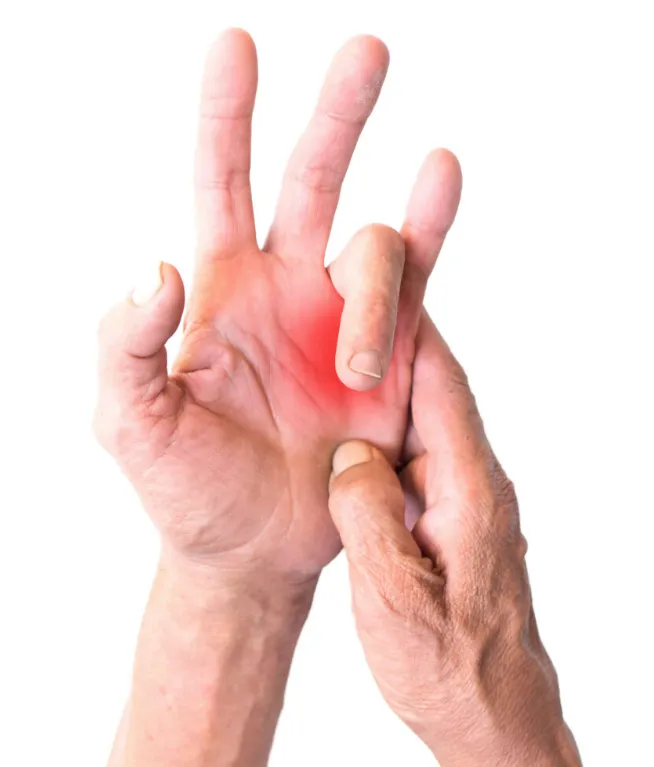
How It Works
How release with ultrasound guidance works
Ultrasound mapping
High-resolution ultrasound locates the affected tendon and pulley.
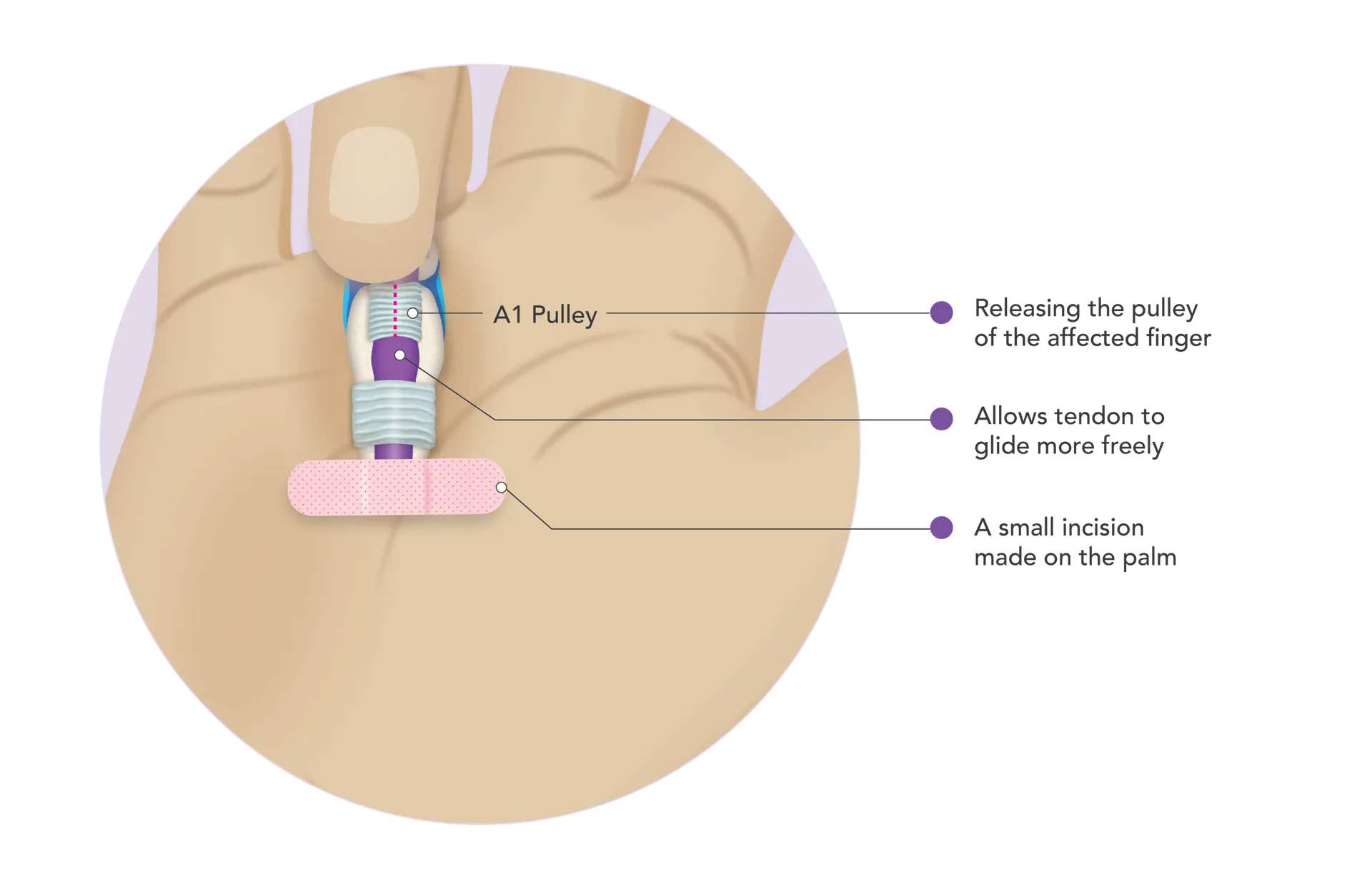
Targeted release
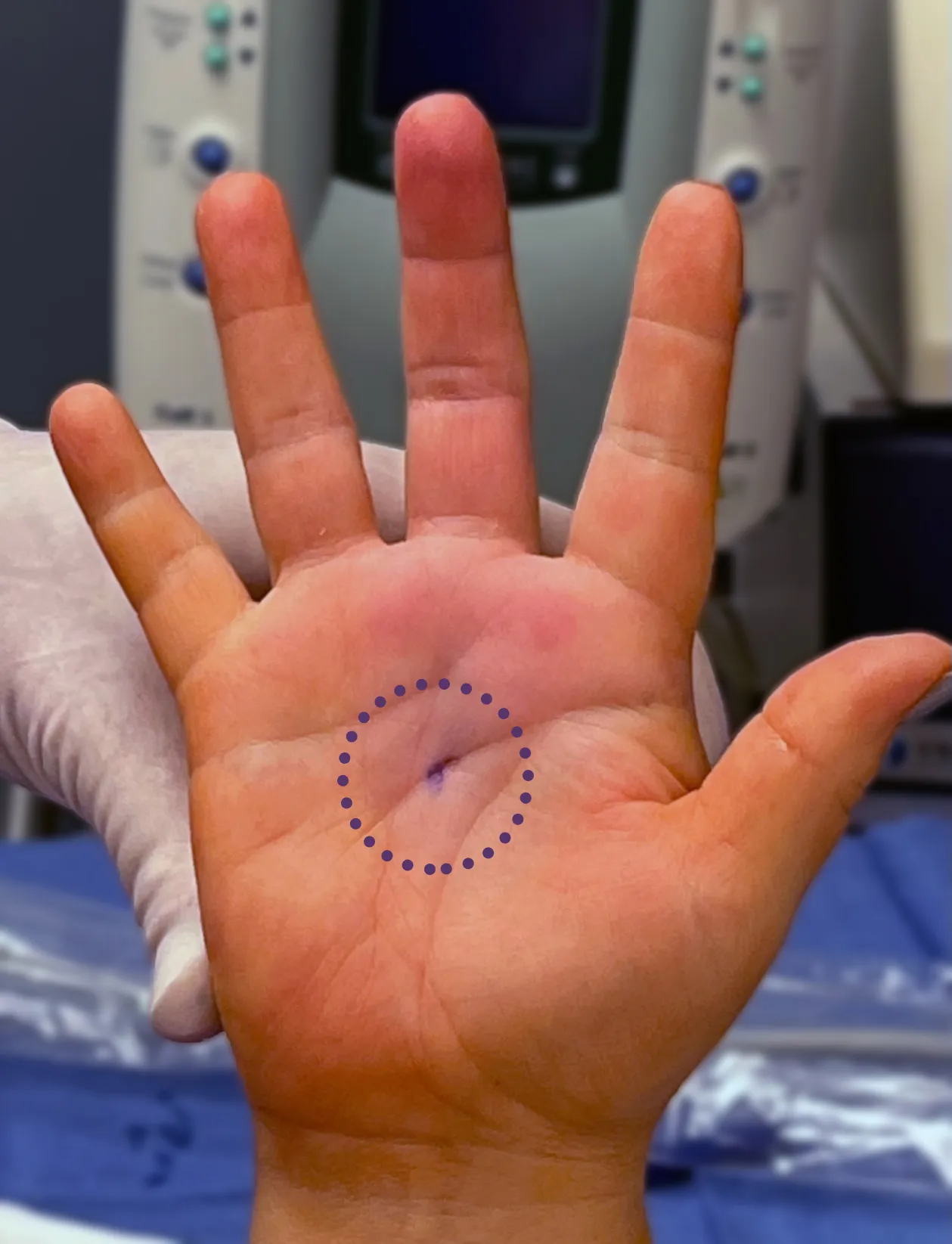
Through a small incision, the tight pulley is released while the anatomy is viewed with ultrasound.
Progressive recovery
Finger motion and activity are advanced according to symptoms, wound healing, and hand demands.
Recovery & Expectations
What recovery depends on
Trigger finger release is intended to relieve the mechanical catching at the A1 pulley. The pace of symptom improvement and return to activity varies, so an evaluation should set expectations for your specific finger, health, and hand demands.
Diagnosis
The examination confirms whether trigger finger or another hand condition is causing the catching or locking.
Prior treatment
The plan accounts for splinting, medication, injections, and whether symptoms returned after earlier care.
Hand demands
Return to gripping, tools, sports, and work is individualized rather than promised on a fixed schedule.
Healing response
Soreness, swelling, stiffness, wound healing, and symptom improvement vary from patient to patient.
For a patient-friendly comparison of nonsurgical and procedural care, read our trigger finger injection-versus-release guide.
2-Minute Check
Am I a candidate for trigger finger release?
Answer a few quick questions. This is educational and is not a diagnosis — only an evaluation can tell for sure.
Do you have pain or a problem limiting your daily activities?
Have basic measures not given you lasting relief?
Would you like an expert opinion on your options?
You may be a strong candidate.
Your answers suggest trigger finger release could be a good fit. The next step is a simple evaluation, where we'll confirm with an exam and imaging and review every option with you — surgical and non-surgical.
This tool is educational and not a diagnosis. Not everyone is a candidate; only a clinical evaluation can determine what's right for you.
You might be a candidate — let's talk.
Some of your answers point toward trigger finger release, but the right path depends on the details. A short evaluation will give you a clear, honest answer and a plan.
This tool is educational and not a diagnosis. Not everyone is a candidate; only a clinical evaluation can determine what's right for you.
Let's take a closer look.
Your answers don't point clearly to trigger finger release yet — but that doesn't mean we can't help. We'll evaluate what's going on and point you to the care that fits, often starting with non-surgical options.
This tool is educational and not a diagnosis. Not everyone is a candidate; only a clinical evaluation can determine what's right for you.
Answer all 3 questions to see your result.
Patient Reviews
What patients say
4.9 average across 509 ratings on 8 review sites
“Dr. Morton is the best. He did my hip replacement and carpal tunnel surgeries. I would not use anyone else.”
— Stephen P.· Google review
“I am absolutely grateful for the care I received from Dr. Morton and his staff! Truly blessed that he was called to perform the surgery on my wrist shortly after my injury.”
— Leona K.· Google review
Review excerpts reflect individual patient experiences and may be lightly condensed. Results vary.
Rehabilitation & Recovery
Physical therapy for trigger finger release
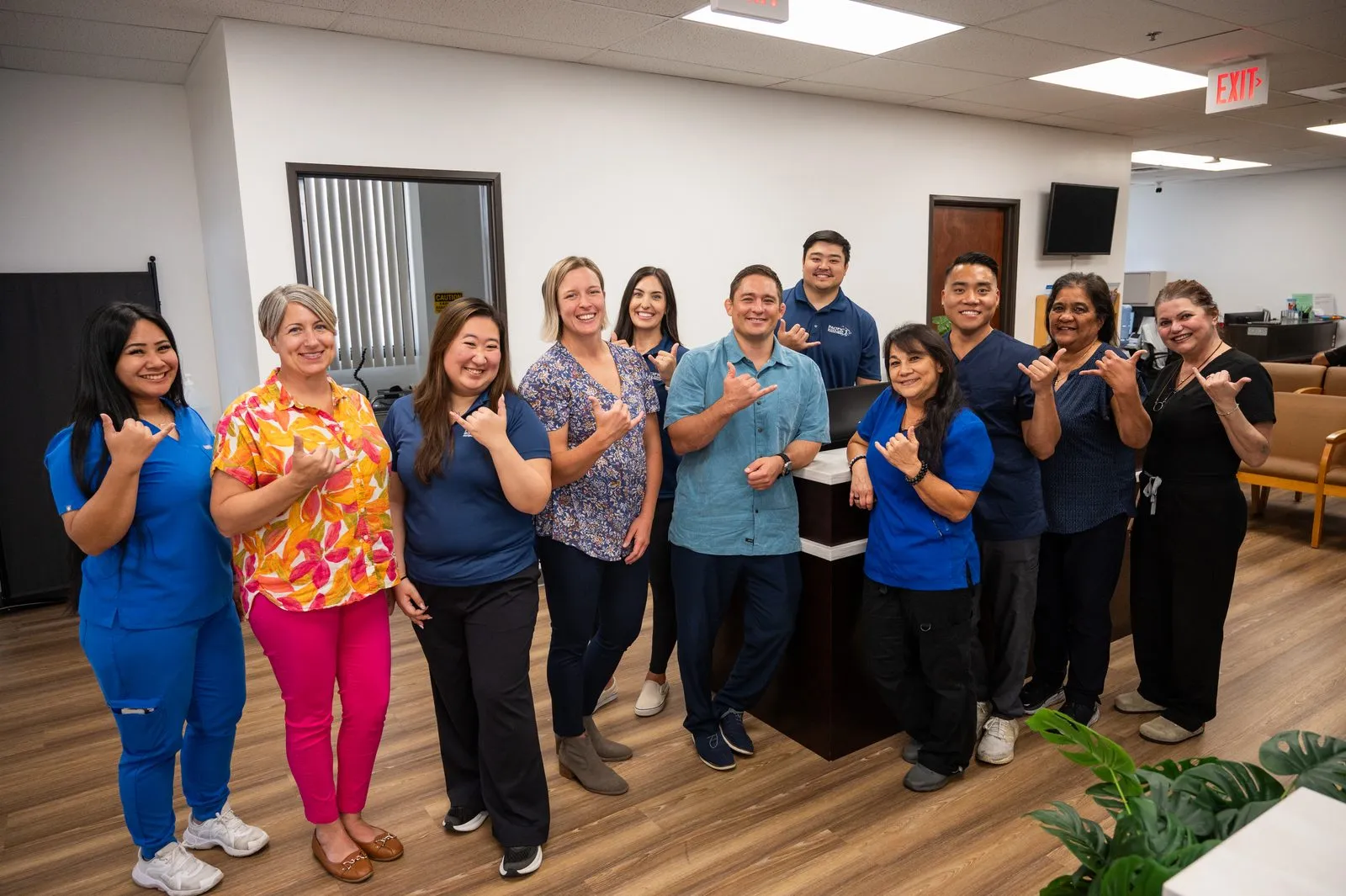
PB&J Physical Therapy works inside our Honolulu and Waipahu/Kunia clinics, so your rehabilitation is planned with the same orthopedic team that treats you. Many orthopedic problems improve with therapy alone, and Hawai‘i allows direct access to physical therapy without a physician referral (some plans still require one for coverage).
PB&J Physical Therapy →Questions, Answered
Frequently asked questions
Do I need surgery for trigger finger?+
Some cases improve with rest, splinting, or a steroid injection. When symptoms persist, ultrasound-guided release is a minimally invasive option.
Is it done awake, in the office?+
Often yes — with local anesthesia and no need for general anesthesia. We'll confirm the plan for you.
How fast is recovery?+
Finger motion is usually encouraged after release, but soreness, swelling, stiffness, wound healing, and return to heavy gripping vary. Your clinician will give activity instructions based on your work and hand demands.
Will it come back?+
Release is intended to address the narrowed A1 pulley, but persistent or recurrent symptoms can occur. We'll review your specific situation and expectations.
Finger catching or locking?
Book an evaluation to see whether ultrasound-guided release can help.