

Understanding the Condition
What is carpal tunnel syndrome?
Carpal tunnel syndrome (CTS) is one of the most common problems affecting the hand, afflicting an estimated 13 million Americans with numbness and tingling in the hands and fingers. It develops when the median nerve is compressed inside the carpal tunnel — a narrow passage at the wrist whose roof is formed by the transverse carpal ligament. Left untreated, it can cause long-term debilitation.
Carpal tunnel release (CTR) treats the condition by dividing the transverse carpal ligament, creating more space for the nerve and tendons and relieving pressure on the median nerve.
Common symptoms
- Numbness or tingling in the thumb, index, or middle finger
- Symptoms that wake you at night
- Symptoms while driving or holding a phone
- Weakness or clumsiness of the hand
Educational, not a diagnosis. Similar symptoms can come from the neck or other nerve problems — an exam confirms the cause.
Conservative Care First
Surgery isn't the first step
For milder or early symptoms, we usually start with non-surgical care. Carpal tunnel release is considered when conservative measures no longer control symptoms — or when nerve compression is more advanced. Not everyone is a candidate for surgery, and we'll tell you honestly which step you're at.
Night splinting
A wrist brace worn at night keeps the wrist in a neutral position, easing pressure on the nerve while you sleep.
Activity modification
Adjusting the positions and repetitive tasks that provoke your symptoms can meaningfully reduce them.
Injections, when appropriate
A corticosteroid injection can calm symptoms for a time and help confirm the diagnosis.

How It Works
Precise, and often in-office
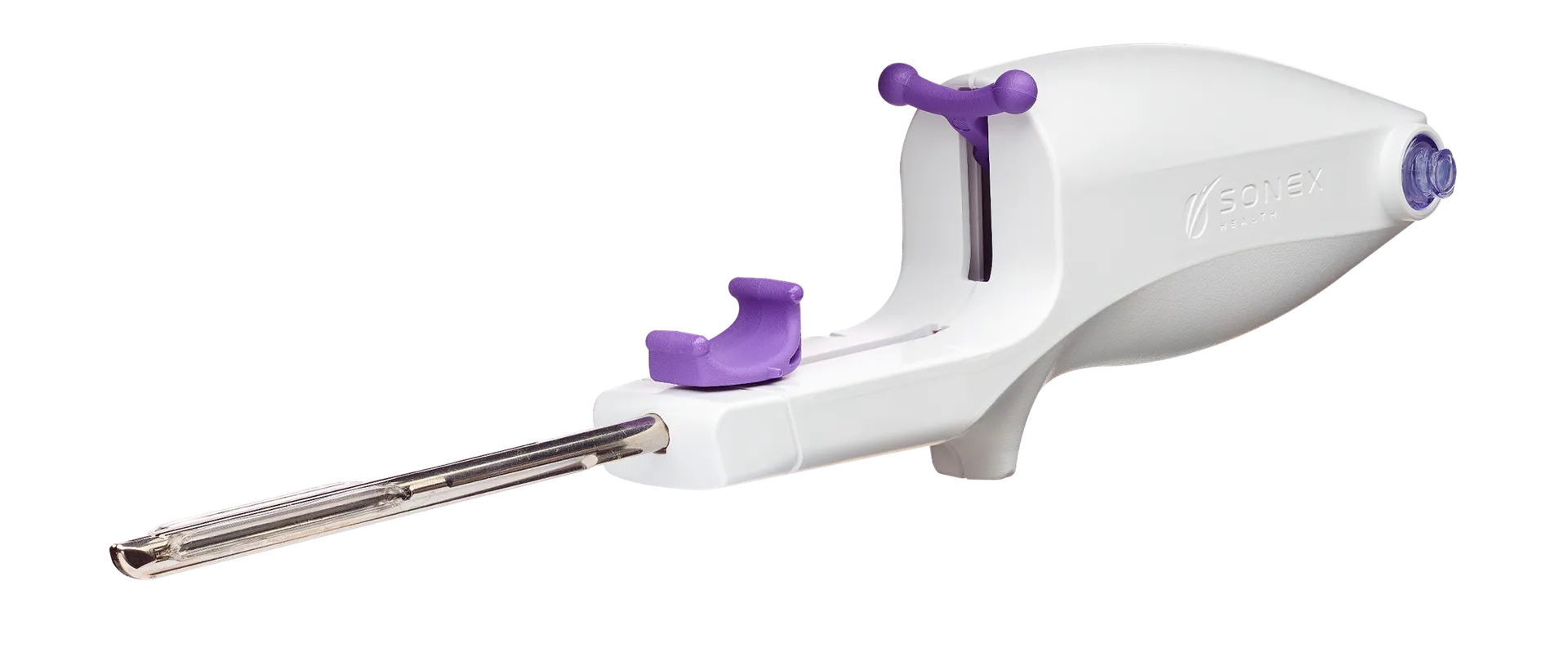
Real-time ultrasound gives the surgeon a live view of the median nerve, tendons, and ligament throughout the release — improved visualization of all critical anatomy through a small, less disruptive wrist incision.
Ultrasound mapping
Real-time imaging locates the nerve, tendon, and ligament with precision.
Tiny incision
Through an incision often only a few millimeters wide, the transverse carpal ligament is released.
Quick recovery
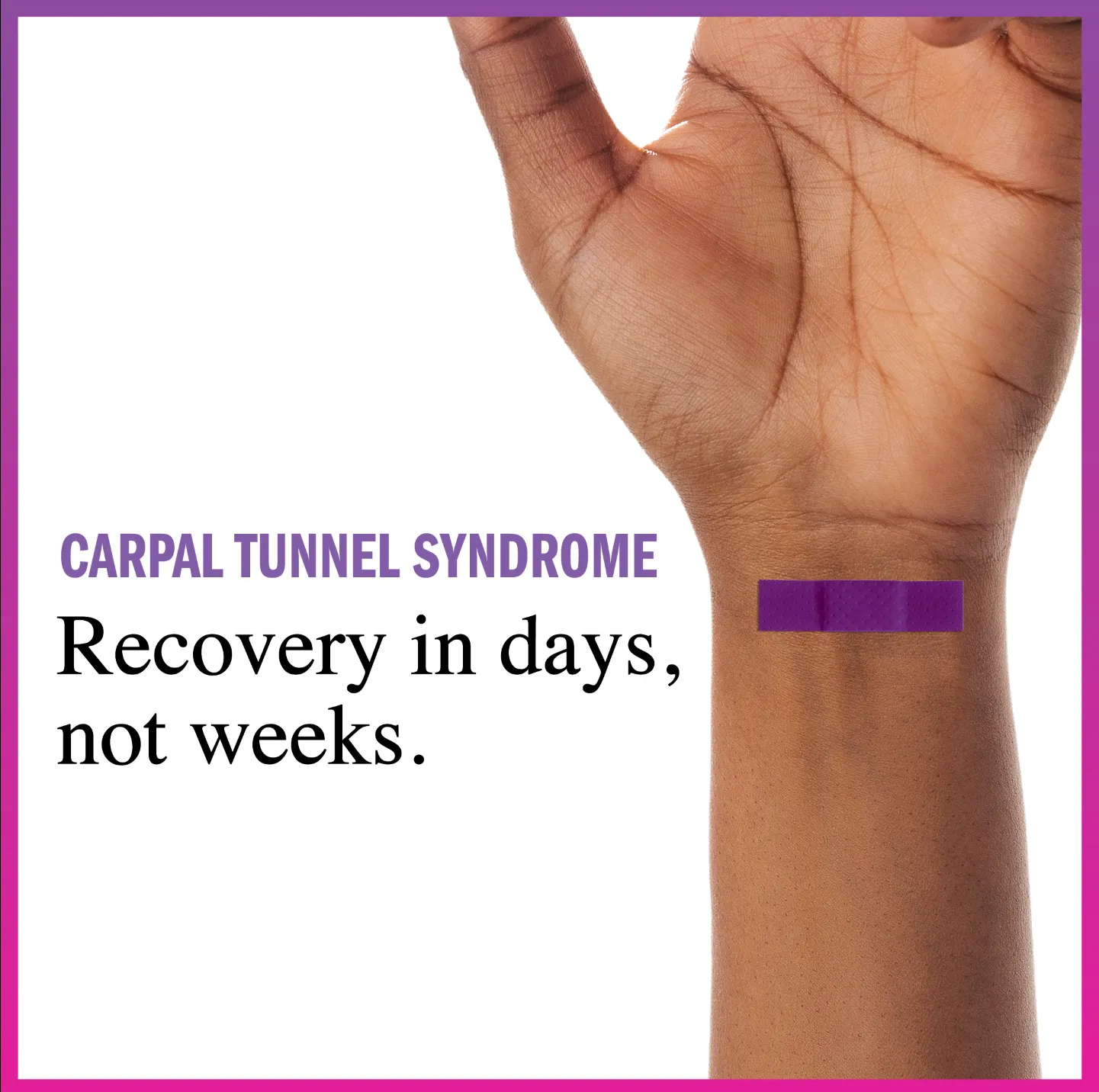
Most patients resume light activity within days, with relief of tingling and numbness.
The Patient Experience
What the procedure — and recovery — feel like
Many people delay treatment for carpal tunnel syndrome because they're intimidated by surgery, worried about recovery time, or concerned about cost. Real-time ultrasound guidance was designed to address exactly those concerns.
Office-based for eligible patients
Performed in a procedure room or office setting — often avoiding the hospital and general anesthesia.
Local anesthesia
The procedure is typically performed using local anesthesia; the release itself is generally performed in minutes.
Small wrist incision
A small, less disruptive wrist incision — usually closed without sutures.
Recovery in days — not weeks or months
Back in days
Most patients can return to work and the activities they love within 3–5 days. Individual recovery varies.
Immediate motion
You can move your hand right away, which supports a rapid recovery.
Therapy typically not required
Post-operative hand therapy is typically not needed — saving you time and money.
Simple pain control
The technique reduces or eliminates the need for opioids — most patients manage with Tylenol® or ibuprofen.
UltraGuideCTR™ is a trademark of Sonex Health, Inc. Carpal tunnel release with UltraGuideCTR may not be appropriate for all patients, and not all patients may benefit. Talk with your doctor about the benefits and risks and whether it's right for you. Individual recovery varies.
Ultrasound-Guided Release by the Numbers
Why real-time ultrasound guidance changes the recovery math for carpal tunnel release.
Watch
Carpal tunnel, explained on video
Evidence & Research
What the evidence says about carpal tunnel release with real-time ultrasound guidance
Ultrasound guidance lets the surgeon release the carpal tunnel through a very small opening while watching the nerve in real time. Here is a plain-language summary of what peer-reviewed research and the American Academy of Orthopaedic Surgeons report — with honest limits.
Carpal tunnel syndrome is the most common compressive nerve condition in the hand. When night splints and injections no longer control symptoms, releasing the transverse carpal ligament reliably relieves them for most patients.1
Ultrasound-guided release is done through a tiny opening using real-time imaging to protect the nerve. In a randomized clinical trial it was associated with a faster return to normal activities than conventional open release.2
In prospective studies, carpal tunnel release performed with real-time ultrasound guidance showed high rates of symptom relief and a low complication rate, with quick functional recovery.3
Carpal tunnel release is durable: most patients get lasting relief, and releasing the nerve earlier may help prevent permanent damage in more severe cases. Individual results vary.4
The procedure is performed in-office under local anesthesia for eligible patients. Severe or long-standing nerve compression may limit how fully symptoms recover. Not everyone is a candidate, and individual results vary. This page is educational and is not a substitute for medical advice.
References
- American Academy of Orthopaedic Surgeons (AAOS), OrthoInfo. Carpal Tunnel Syndrome & Carpal Tunnel Release Surgery. Accessed 2026. View source ↗
- Rojo-Manaute JM, Capa-Grasa A, Chana-Rodríguez F, et al. Ultra-minimally invasive ultrasound-guided carpal tunnel release: a randomized clinical trial. J Ultrasound Med. 2016;35(6):1149–1157. View source ↗
- Petrover D, Silvera J, De Baere T, et al. Percutaneous ultrasound-guided carpal tunnel release: study upon clinical efficacy and safety. Cardiovasc Intervent Radiol. 2017;40(4):568–575. View source ↗
- American Academy of Orthopaedic Surgeons. Management of Carpal Tunnel Syndrome: Evidence-Based Clinical Practice Guideline. 2016. View source ↗
Honest Expectations
What are the risks of carpal tunnel release?
Carpal tunnel release is a small, well-established procedure, but it is still surgery on a nerve. Here is what the American Academy of Orthopaedic Surgeons lists, and how real-time ultrasound guidance addresses several of these risks.
Incomplete relief or recurrence
If the ligament is not fully divided, or if the nerve has been compressed for a long time, numbness and tingling may only partly improve. Long-standing severe compression can leave permanent nerve changes that no procedure fully reverses.
Nerve, tendon, or blood-vessel injury
The median nerve, its branches, the tendons, and nearby vessels sit close to the ligament being released. Injury is rare; real-time ultrasound is designed to keep these structures in view throughout the procedure.
Infection
Infection after carpal tunnel release is uncommon but possible and may require antibiotics or further treatment.
Pillar pain or scar tenderness
Aching at the base of the palm or tenderness around the incision can persist for weeks to months. The small incision used with ultrasound guidance is intended to reduce this.
Temporary weakness or stiffness
Grip strength and finger motion can feel weaker or stiffer at first; immediate motion and normal use usually restore them over the following weeks.
How we work to lower your risk
- Real-time ultrasound visualization of the median nerve, tendons, and vessels throughout the release
- An incision often only a few millimeters wide, under local anesthesia, with immediate hand motion encouraged afterward
- A thorough evaluation first — including nerve testing when indicated — so surgery is offered only when it is likely to help
Source: American Academy of Orthopaedic Surgeons, OrthoInfo — Carpal Tunnel Syndrome and Carpal Tunnel Release. Every patient’s risk is different. Dr. Morton reviews your individual risks and benefits — based on your health, anatomy, and history — before any decision about surgery.
2-Minute Check
Am I a candidate for carpal tunnel release with real-time ultrasound guidance?
Answer a few quick questions. This is educational and is not a diagnosis — only an evaluation can tell for sure.
Do you have numbness or tingling in your thumb, index, or middle finger?
Do symptoms wake you at night or worsen when driving or holding a phone?
Have splints or injections stopped helping?
You may be a strong candidate.
Your answers suggest carpal tunnel release with real-time ultrasound guidance could be a good fit. The next step is a simple evaluation, where we'll confirm with an exam and imaging and review every option with you — surgical and non-surgical.
This tool is educational and not a diagnosis. Not everyone is a candidate; only a clinical evaluation can determine what's right for you.
You might be a candidate — let's talk.
Some of your answers point toward carpal tunnel release with real-time ultrasound guidance, but the right path depends on the details. A short evaluation will give you a clear, honest answer and a plan.
This tool is educational and not a diagnosis. Not everyone is a candidate; only a clinical evaluation can determine what's right for you.
Let's take a closer look.
Your answers don't point clearly to carpal tunnel release with real-time ultrasound guidance yet — but that doesn't mean we can't help. We'll evaluate what's going on and point you to the care that fits, often starting with non-surgical options.
This tool is educational and not a diagnosis. Not everyone is a candidate; only a clinical evaluation can determine what's right for you.
Answer all 3 questions to see your result.
Patient Reviews
What patients say
4.9 average across 509 ratings on 8 review sites
“Dr. Morton is the best. He did my hip replacement and carpal tunnel surgeries. I would not use anyone else.”
— Stephen P.· Google review
“I am absolutely grateful for the care I received from Dr. Morton and his staff! Truly blessed that he was called to perform the surgery on my wrist shortly after my injury.”
— Leona K.· Google review
Review excerpts reflect individual patient experiences and may be lightly condensed. Results vary.

Rehabilitation & Recovery
Physical therapy for carpal tunnel release
PB&J Physical Therapy works inside our Honolulu and Waipahu/Kunia clinics, so your rehabilitation is planned with the same orthopedic team that treats you. Many orthopedic problems improve with therapy alone, and Hawai‘i allows direct access to physical therapy without a physician referral (some plans still require one for coverage).
PB&J Physical Therapy →Questions, Answered
Frequently asked questions
How is this different from traditional carpal tunnel surgery?+
It uses real-time ultrasound and a few-millimeter incision instead of a larger open incision — which can mean less scarring, less pain, and a faster return to work, with comparable long-term results.
Is it done in the office?+
In many cases, yes — carpal tunnel release with real-time ultrasound guidance can be performed in a procedure room or office setting, typically using local anesthesia and avoiding the hospital and general anesthesia. We'll confirm what's right for you.
How soon can I use my hand?+
You can move your hand immediately, and most patients return to work and the activities they love within 3–5 days. Individual recovery varies; your care team will give you specific guidance.
Will my numbness go away?+
Many patients experience significant relief of tingling and numbness; recovery varies by how long the nerve was compressed. Left untreated, carpal tunnel syndrome can cause long-term debilitation — which is why an evaluation is worth having early.
Do I have to try splints or injections first?+
Often, yes. Milder symptoms are frequently managed with night splinting, activity modification, and sometimes an injection. Carpal tunnel release is considered when conservative care no longer controls symptoms or nerve compression is more advanced. We'll be honest about which step you're at.
Is this a new or experimental technique?+
No. Carpal tunnel release performed under ultrasound guidance was first documented in 1997, and the UltraGuideCTR™ device has been used clinically since 2017. Long-term results are comparable to open or endoscopic release.
Will I need hand therapy afterward?+
Post-operative therapy is typically not required — saving time and money. We'll let you know if your particular situation calls for it.
Is carpal tunnel release covered by insurance?+
Carpal tunnel release is covered by Medicare and most private insurance companies. We recommend confirming coverage with your plan before treatment — our team can help.
Numbness or tingling in your hand?
Book an evaluation and find out whether ultrasound-guided release is right for you.